


Buying Guides
Cat Proof Couch: Practical Guide
Match your cat’s observed scratching posture and target zones to a stable alternative, then inspect the exact couch, room route and care record before buying.
On this page
A cat proof couch is a conditional household result, not a fabric that no claw can damage. This practical guide finds the match through an exact couch whose exposed target zones, room position and care path work with your cat’s observed scratching pattern—and a room that offers a better-matched scratching choice before the couch target. Start with posture, location and routine. Then inspect the same zones on every finalist and keep unknown performance claims unresolved.
Record the scratch pattern before shopping
Scratching is normal feline behavior, not a defect that a furniture label can remove. The ASPCA’s scratching guidance recommends giving cats appropriate surfaces and notes that individuals can prefer vertical, horizontal or slanted options. Ohio State’s Indoor Pet Initiative likewise distinguishes cats that scratch couch corners from those that target rugs or carpets. Those sources support observation and choice; they do not certify any couch as damage-proof.
Record posture, exact location and routine as separate fields. Photograph the target from far enough away to show the room route, then add a close view of the actual surface, edge or join. Note which side is used, what the cat was doing immediately before, and whether the target repeats after waking, entering the room or moving between resources. A vertical stretch on an entry-side arm creates a different couch and room brief from low scratching at a rug edge.
| Observed pattern | Record on the current target | What to compare before a couch |
|---|---|---|
| Vertical full stretch | Arm, outer side or back; working height; surface direction; approach route | A tall, stable upright scratching surface that permits the cat’s demonstrated stretch |
| Horizontal low reach | Rug edge, floor junction, low seat or cushion face; body direction; nearby route | A stable flat or angled option with a surface the cat will actually use |
| Repeated edge or join pull | Piping, seam, tuft, zipper area, cushion gap or module boundary | An exact couch with fewer exposed catch points in that known zone, plus a matched alternative |
| After-rest or entry target | Nearest sleeping place or room entrance; first object reached; repeat sequence | A scratching option close to the existing target or on the same regular route |
For a multi-cat household, make a separate record for each cat rather than averaging their preferences. One cat may stretch vertically at an entrance while another scratches a horizontal surface near a resting area. A single “best fabric for cats” cannot represent two different postures, routes and target zones.

Put the better scratching option before the couch target
The useful alternative matches the cat’s demonstrated posture and sits where the behavior already happens. The ASPCA advises offering different surfaces and orientations, with a vertical post stable and tall enough for a full stretch. Ohio State advises matching the material the cat prefers and placing an alternative near the object already being scratched; it also notes that scratching resources can belong along routes to common areas.
- Fix one target. Start with the most repeated current location instead of changing the whole room at once.
- Match the posture. Compare upright, horizontal or angled formats according to the recorded body position.
- Match the working surface. Use the cat’s demonstrated preference as the starting clue; do not assume one material suits every cat.
- Check size and stability. The option must support the observed stretch or reach without shifting or collapsing during normal use.
- Place it at the decision point. Keep it next to the known target or before that target on the regular route—not in a remote corner chosen only for appearance.
- Observe before buying. Confirm that the cat can find and use the option in the real routine. Mark the result observed, mixed or unresolved; do not rename a short trial a guarantee.

Preserve the retreat and the human route
The scratcher, retreat and human walkway are three different room jobs. The AAFP and ISFM Feline Environmental Needs Guidelines describe a safe place as a private, secure retreat and treat scratching, resting and other key resources as distinct parts of the environment. Do not make the only retreat reachable through a busy coffee-table path, and do not place a scratcher where people must step around it whenever they sit.
Run the arrangement with the room occupied. Approach from the cat’s usual direction, sit in every protected human seat, use the table and doors, and walk the main route. The layout fails if the better scratching option is unstable, hidden by a moved ottoman, blocked during normal use, or dependent on closing the cat’s preferred retreat. In a multi-cat room, preserve choice rather than forcing every cat through one narrow resource point.
Inspect the exact couch where claws can catch
Inspect the exact zone the cat would meet, not only a center swatch. Keep the model, upholstery variant and complete configuration fixed. A sample can help identify visible surface construction, but it cannot show every arm corner, seam, zipper, module join or underside. Photographs and written answers should belong to the same selected variant.
Trace the working surface
Move from the center field toward the known target. Record visible loops, ribs, pile direction, texture changes and any transition from upholstery to another material. Do not rank chenille, velvet, microfiber or another name by itself. The name does not disclose every yarn, weave, backing, finish, seam or tested failure mode, and appearance is not a claw-resistance test.
If a seller provides a performance claim, save the exact test method, result, specimen and limitation. Ask whether the tested specimen is the same selected upholstery and whether the result addresses snagging, puncture or another failure you actually need to compare. A generic durability statement cannot fill an unrelated cat-claw field.
Follow edges, joins and accessible details
Inspect the arm face and corner, front rail, cushion edges, piping, tufting, zipper pulls, loose trim and gaps between seats. On a modular couch, include the boundary exposed when modules shift or separate. Record whether the known scratching route ends at a center panel, a vulnerable edge or an accessible underside. A smooth-looking center surface does not approve a nearby seam that the cat repeatedly reaches.
This catch-point audit is an editorial inspection record, not a textile or product-performance test. Its job is to make unknowns visible. When a decisive zone cannot be photographed, sampled or confirmed, mark it unresolved rather than inferring performance from a lifestyle image.

Complete the care and replacement record
Obtain the current instructions for the exact upholstery and component. Separate vacuuming, spot cleaning, removable-cover care and replacement availability; one permission does not imply another. Record which cover or module the instruction applies to, permitted tools and solutions, the required dry or return-to-use state, and whether the known target part can be replaced separately.
Recovery matters because the guide does not promise zero damage. The couch passes this field only when the household can follow the documented care route and accept the remaining uncertainty. An unapproved throw or cover is not automatically a recovery plan; it can change fit, access, appearance and care, so exact maker guidance controls compatibility.
Read the current Monvane pet-friendly record narrowly
The current Monvane Pet-Friendly Modular Sofas collection lists two products: Human & Pet Modular Sofa configurations with six and four seats. The current 6-seat product page describes adaptable modules, an anti-slip base and care options. Those fields can support a room and recovery audit. The collection name and shared-living imagery do not certify cat-claw performance.

The same current 6-seat page needs clarification before it can support a surface decision. Its public document title identifies “Corduroy,” its selector shows “Crushed Velvet,” and the specifications identify “Short-pile Chenille.” The reviewed public page does not publish a cat-specific claw, scratch, snag or puncture test. Do not choose among those material labels, transfer the image to a different variant, or treat “pet-friendly” as the missing test result.
Send one exact request through the Monvane Support Center: selected model and color; confirmed upholstery identity; close photographs of the known target zones; care permissions and removable-cover scope; separately replaceable covers or modules; and any test method, specimen and result relevant to the failure mode. Keep the field paused until the answer identifies the exact variant.
Run one matched room and product rehearsal
Apply the completed room and product records to one candidate and one occupied routine.
Worked example: an entry-side arm target
Consider a hypothetical cat that stretches vertically on the hallway-side arm after entering the living room and after waking from a nearby resting place. The current arm is therefore both a full-stretch surface and the first prominent object on a repeated route. The household compares a tall, stable upright scratching surface beside that arm—not across the room—and preserves the route to the resting place.
For each couch finalist, the buyer inspects the corresponding hallway-side arm: full working height, center surface, corner, piping, lower edge and nearby cushion join. The product record must identify the exact upholstery and permitted care for that arm. A finalist with an unresolved material identity or a prominent accessible edge remains paused even if the room placement works.
The couch is not approved because the scratcher exists; it is approved only after the resource placement and exact arm record both pass. This example demonstrates the shopping method. It is not a real customer result, a behavior protocol or proof that the same placement works for another cat.
Use an observable completion state
Mark the room part complete when the matched option is stable, accessible at the normal decision point, used in the observed routine, and compatible with the cat’s retreat and the human route. Mark the couch part complete when the exact target zones are documented, no known hard failure is exposed, care and replacement scope are usable, and any performance claim belongs to the selected specimen.
If the cat continues to target the current couch or the better option is ignored, the room proof is unresolved. Recheck orientation, surface, stability and location rather than compensating with a stronger furniture claim. Persistent or concerning behavior is outside a shopping guide; seek an appropriate veterinary or qualified behavior professional instead of expecting a new couch to act as treatment.
Make the cat-proof couch decision
| Decision | Observable condition | Next action |
|---|---|---|
| Shortlist | Each cat has a recorded posture and target; a matched, stable alternative works at the decision point; exact couch catch points, routes, retreat and recovery record pass | Save the final room photograph, exact variant, written answers, care record and accepted remaining uncertainty |
| Pause | Material identity, target-zone detail, test specimen, care permission, cover scope, replacement path or resource use is unresolved | Obtain the missing exact evidence or revise the room setup, then repeat only the affected check |
| Reject | A known target exposes an unacceptable edge or join; the room blocks resource or retreat access; care is incompatible; or the plan depends on promised behavior change | Change the exact couch, resource format or layout; a durable-sounding label cannot overrule a known target-zone failure |
The practical answer is conditional: the best couch for cat owners is the exact model that passes the cat’s real scratch-posture and target map, leaves a better-matched scratching choice on the right route, preserves retreat and human use, and provides a documented recovery path. If any of those fields is missing, keep the candidate paused instead of calling it cat proof.
Sources and scope
General scratching guidance was checked August 20, 2026 against the ASPCA’s Destructive Scratching page and Ohio State’s Indoor Pet Initiative. Safe-place and separated-resource boundaries come from the AAFP and ISFM Feline Environmental Needs Guidelines. Current Monvane collection and exact-product fields were checked the same day. Product wording can change.
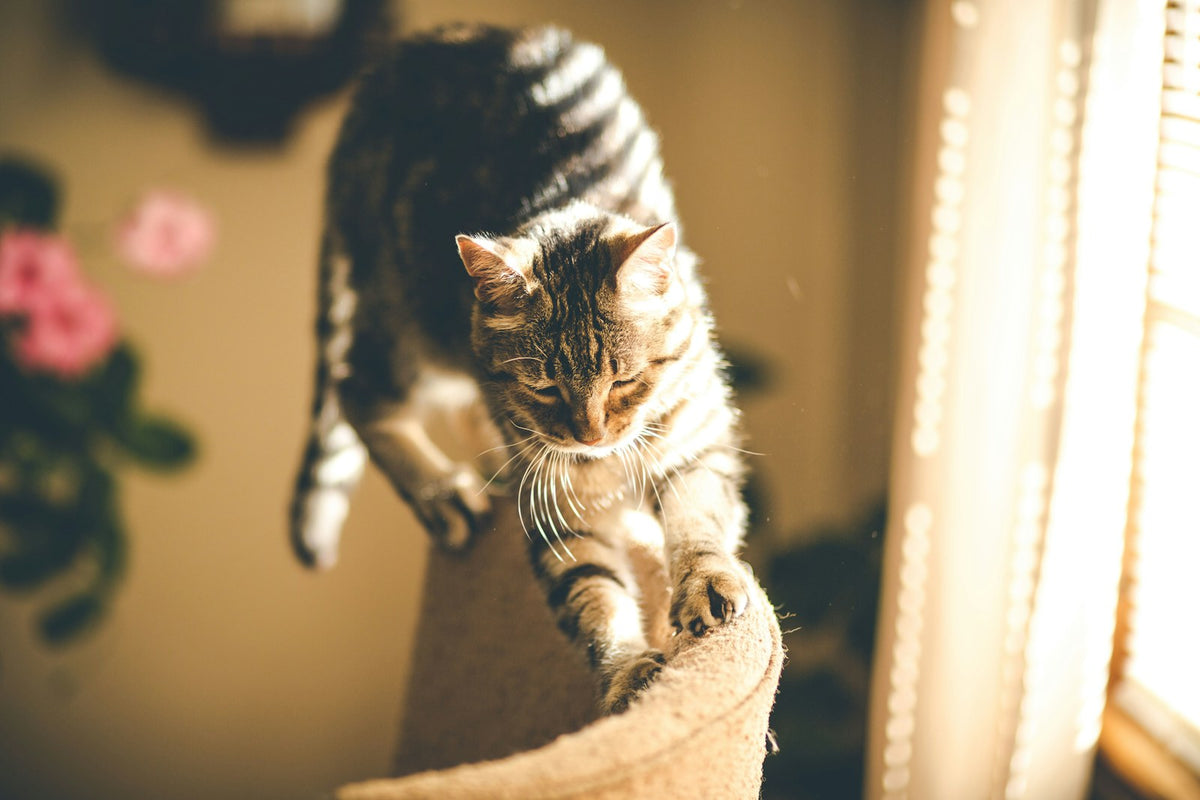
The pattern table, route diagram, catch-point audit, worked example and verdict are bounded Monvane editorial shopping tools. They are not animal-behavior treatment, veterinary advice, a textile test, safety approval or a product-performance guarantee. The generic cat photographs illustrate household behavior and positioning, not a Monvane product or performance result; the product-family image shows visible layout only.


