


Buying Guides
Bouclé Couch Sectional: Comfort, Durability and Care
Choose a bouclé sectional by its actual texture, seat and care requirements—not by a soft-looking photo or one abrasion number.
On this page
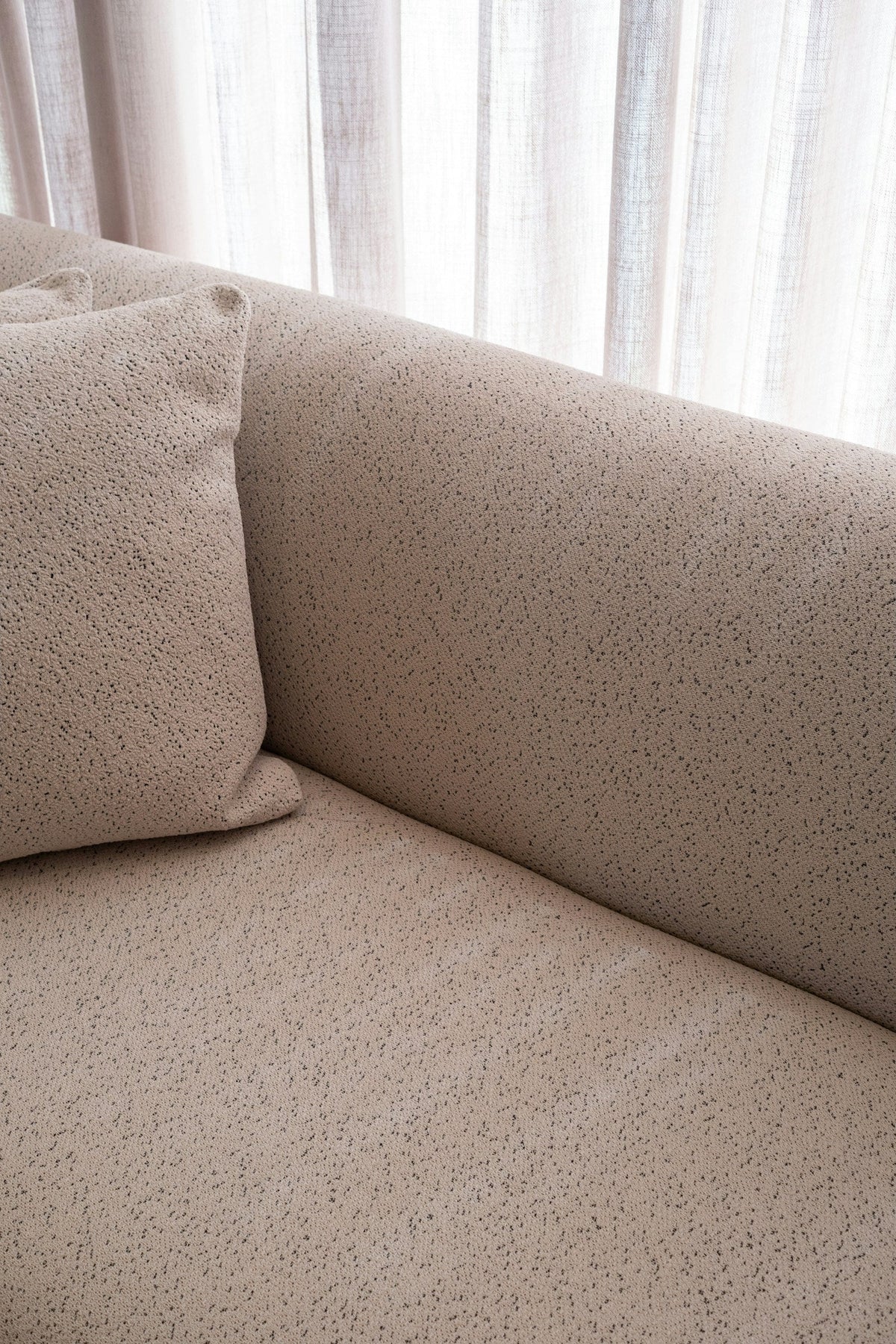
A bouclé couch sectional can suit someone who enjoys a pronounced, nubby surface and is willing to maintain it carefully. It is not automatically soft, durable or easy to clean. Bouclé refers to a looped yarn texture, not one fiber recipe. Before buying, compare the actual swatch, sit on the complete sectional and read the care instructions for that exact upholstery. The biggest avoidable mistake is treating every cream, curly-looking sofa as the same material.

Two “Classic Bouclé” fabrics, two different care assumptions
The difference is concrete. These supplier documents use similar fabric names but describe different materials and cleaning approaches. They are examples, not care instructions for an unidentified sectional.
| Documented fabric | Fiber content | Published care direction |
|---|---|---|
| Knoll Classic Boucle, 466777 | 63% wool, 25% post-industrial recycled nylon, 12% nylon | S: mild, water-free dry-cleaning solvent |
| Modern Classic “Classic Boucle” | 95% polyester, 5% viscose | Its guide permits water-based cleaning for light stains |
Sources checked September 28, 2026: Knoll's technical sheet and Modern Classic's Spring 2023 material-care guide, page 2. The older guide illustrates a documented difference; confirm the current instructions before treating a present-day purchase.
A water-and-detergent tip copied from the second fabric should not be transferred to the first. Nor does the first fabric's S code mean all bouclé must be solvent-cleaned. Request the supplier or fabric name, fiber percentages and care document together. A photograph cannot fill any of those fields.

Check the texture where your body will touch it
Our recommendation is to separate surface comfort from sitting comfort. Hold the exact swatch against a bare forearm, then compare it with the clothing you normally wear at home. Look for a feel you enjoy, not just a texture that photographs well. Avoid dragging jewelry or rough hardware across a sample.
On the complete sectional, check armrest contact, the back of your legs at the front edge and the cushion join in the corner. Try both an upright seat and the chaise if the configuration includes one. A surface that feels pleasant under your palm may be distracting against bare legs; a plush-looking cover cannot fix a seat that is too deep for your preferred posture.

For a shared sectional, include the person who dislikes rough textures, not only the person choosing the color. If an in-person trial is impossible, a swatch resolves the surface question only. Compare seat dimensions with furniture you already find comfortable and review the return conditions separately.
Durability means more than keeping the loops intact
The Knoll sheet above reports 100,000 double rubs under ASTM D4157/Wyzenbeek. It also warns that results above the relevant guidelines do not indicate lifespan. That is one fabric's reported abrasion result, not a forecast for a sectional and not a test of your pet's claws. Do not convert the number into years of ownership.
For bouclé, pay particular attention to raised strands and places where clothing or claws might catch. A snag, a pill and trapped debris are different observations. Our owner-response guide is deliberately conservative:
| What you see | What to do next | What not to assume |
|---|---|---|
| A single pulled loop | Keep objects from catching it and send a close photo to the seller for repair advice. | Do not pull or cut it; the raised strand may belong to the fabric's structure. |
| Small fuzzy balls above the surface | Ask whether the exact fabric permits a depilling tool and which one. | Do not shave all raised texture: intentional loops are not pills. |
| Crumbs lodged among the loops | Use the permitted gentle dry-maintenance method below. | Do not dig into the texture with a sharp tool. |
If pets repeatedly scratch upholstery, treat visible loops as a reason to investigate snag behavior—not as evidence that damage is inevitable or that a “performance” label eliminates it. For frequent spills, the cleaning route may matter more than the abrasion number. Ask about replacement covers or professional cleaning before ordering, not after the first stain.
Maintain the surface without flattening or pulling it
Start with dry maintenance
This routine is for intact upholstery whose maker permits vacuuming. Prepare a clean upholstery attachment, a vacuum with controllable suction and the exact care instructions. Do not unzip or remove a cover merely because a zipper is visible.
- Remove loose objects and inspect the seat, inside corner and front edge for caught threads, open seams or a damp stain. Keep a damaged or wet area out of this dry-cleaning pass.
- Try the permitted attachment gently on a discreet area first. Avoid a rotating brush. Use enough suction to collect loose dust without dragging the surface.
- Work across each accessible panel with light passes, then approach the creases between cushions without forcing the nozzle into the fabric. Move cushions only as the maker allows.
- Stop if you see new fuzz or a lifted loop. Finish when loose debris is gone and the original texture remains undisturbed—not when the surface has been brushed uniformly flat.
For a spill, separate pickup from stain treatment
Gently absorb excess liquid with a clean, white cloth without scrubbing. Then use the exact fabric's stain instructions; do not automatically add water, soap or steam. For the Knoll example, Maharam's maintenance guide recommends professional furniture cleaning, proper-attachment vacuuming and avoiding heat or excess rubbing. Its solvent guidance is not a household mixing recipe.
If color transfers, a ring grows, texture changes or the instructions are unclear, stop and send a photo to the seller or a qualified upholstery cleaner. Record what spilled and what you already used. Let any authorized treatment dry as directed before sitting; persistent moisture or a changed surface needs follow-up, not another stronger cleaning attempt.
Choose it for a routine you will actually keep
A bouclé sectional is worth shortlisting when you enjoy the exact texture, the complete seat works for the household and its permitted maintenance is practical. It is a poor match when you want a perfectly smooth surface, cannot keep sharp objects from catching the upholstery, or require machine-washable covers that the seller has not documented.
A water-only household routine also rules out a solvent-only fabric unless you are willing to use its professional-care route. That is a more useful decision than asking whether all bouclé is “high maintenance.” Select the actual blend, loop structure and care system you can live with.


