


Buying Guides
Sectional Sofa With a Wedge Corner: What Changes?
A practical explanation of sectional wedge corners, including a two-wedge turn example and a way to count seats without confusing them with modules.
On this page
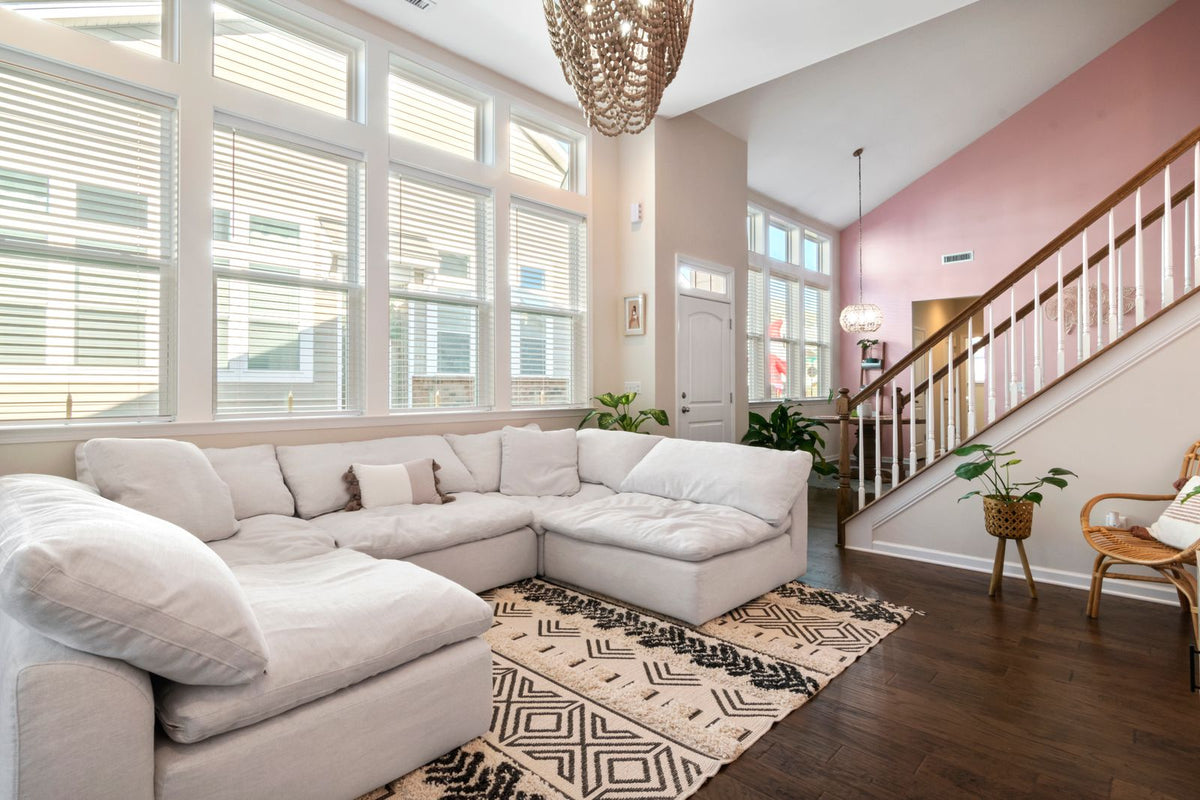
A sectional sofa with a wedge corner uses a shaped joining section to turn the seating around an angle. Depending on the system, the turn may use one broad corner piece or several narrower wedges. The useful change is the direction and space of the corner seat—not automatically more seating or better comfort. Before choosing one, check what the component actually does, how many pieces complete the turn and whether people can use the adjacent seats together.
A wedge seat is not a wedge console
A wedge seat changes the direction of the adjoining sofa sections through an angled or rounded shape. Its front and back edges need not have the same width. A square-corner unit makes a different transition, while a console occupies space between seats for a surface or storage rather than another sitting position. Retail names overlap, so use the component drawing alongside the name.
| Component | What to identify | Buying consequence |
|---|---|---|
| Wedge seat or wedge corner | A shaped upholstered sitting section that turns the next run | Confirm its turning angle, seat shape and required neighboring pieces. |
| Square corner | A corner sitting unit with a squarer plan | Compare the actual inside seat and outside footprint, not just its label. |
| Wedge console | An angled non-seat component, such as a tray or storage unit | Do not add it to the seating count or substitute it for a required seat module. |
For an example of the naming differences, LEE lists a 5285-37 Wedge Corner separately from square-corner and angle-wedge components. The names identify different components within that range; they are not evidence that parts from different ranges can connect to one another.
A chaise extends a lounge position for the legs. It can create an L-shaped outline without adding a second run of upright seating. If your real wish is to stretch out, a chaise may solve that more directly than changing the corner shape.

One corner does not always mean one piece
The official Lovesac wedge setup instructions provide a useful example: two Wedge Seat Frames placed together make a 90-degree turn. Buying one wedge therefore does not reproduce that complete corner. This is a fact about that particular system, not a rule that every brand's wedge has the same angle.
Ask the seller to mark the entire corner assembly on the configuration drawing. Then match it to the order: the quantity of wedge or corner pieces, required backs and sides, and connecting parts. A photo of a finished sectional can hide the seams that tell you where one component ends.
Do not add published component widths in a straight line to estimate an angled sectional's wall run. Turning the pieces changes their direction. Use the manufacturer's complete plan-view dimensions for the selected arrangement, including the widest rear points and the furthest projections.
Count sitting positions separately from components
Consider a hypothetical order containing two single-seat arm units, one armless seat, one wedge seat and one console. That is five components, but only four potential sitting units. The console contributes a useful function without creating a fifth seat.
Even the four-seat count needs a real-use check. If the wedge occupant's knees share the same space as the adjacent sitter's legs, you might find only three positions comfortable at once. That is an illustrative household result, not a capacity rating. Conversely, a wider corner may work well for your preferred angled posture. The name alone cannot settle it.
Our buying advice is to try the wedge with both neighboring seats occupied. Sit in the direction you would face for conversation or television, place your feet normally, reach the intended table, and get out while the others remain seated. Do not count a position that works only after everyone else moves.
Check both sides of the curve
The outer footprint decides whether the sectional fits beside walls, doors and circulation routes. The inside edge decides how your knees, coffee table and approach to the seats share the space. Improving one does not guarantee an improvement in the other.

Compare the square-corner and wedge configurations using the same room and the same neighboring furniture. Trace each exact outline separately. Put the table where it will actually stay, then walk to the corner and test the occupied seating. A rounded table is worth trying if a table corner intrudes, but its diameter can still consume too much space.
If the sectional includes reclining seats, use its specific compatibility and clearance instructions as an additional constraint. Do not assume a wedge creates enough room for adjacent footrests. This guide explains the corner choice, not how to operate an unidentified mechanism.
Choose the corner for a job you will use
Choose a wedge corner when its angled position suits a regular sitter, the neighboring seats remain usable, and the complete outside shape works in the room. It can be a worthwhile layout choice without being the smallest configuration.
Keep the square corner or choose another layout when the wedge gains no useful sitting position, pushes the rear outline into a route or leaves the main viewer facing awkwardly. If the need is a place for drinks rather than another person, compare a compatible console or separate table on that basis.
Before ordering, save the exact configuration drawing with the component quantities and your usable-seat count. A wedge corner is successful when the turn works for the people sitting there—not simply when the sofa looks more rounded.


