


Furniture Buying
GREENGUARD-Certified Sofas: What the Certification Does and Does Not Mean
GREENGUARD is chemical-emissions certification, not a complete sofa-quality or health guarantee. Learn the difference between GREENGUARD and Gold, then check that the current certified scope includes the sofa you plan to order.
On this page
GREENGUARD-certified sofas meet a chemical-emissions certification program for the product scope that is actually covered. The certification does not mean zero emissions, a universally safe or allergy-proof sofa, superior durability, or an overall environmental benefit. GREENGUARD Gold is a stricter emissions tier. Before relying on either mark, match the current certification record to the exact sofa, upholstery and configuration you plan to order.
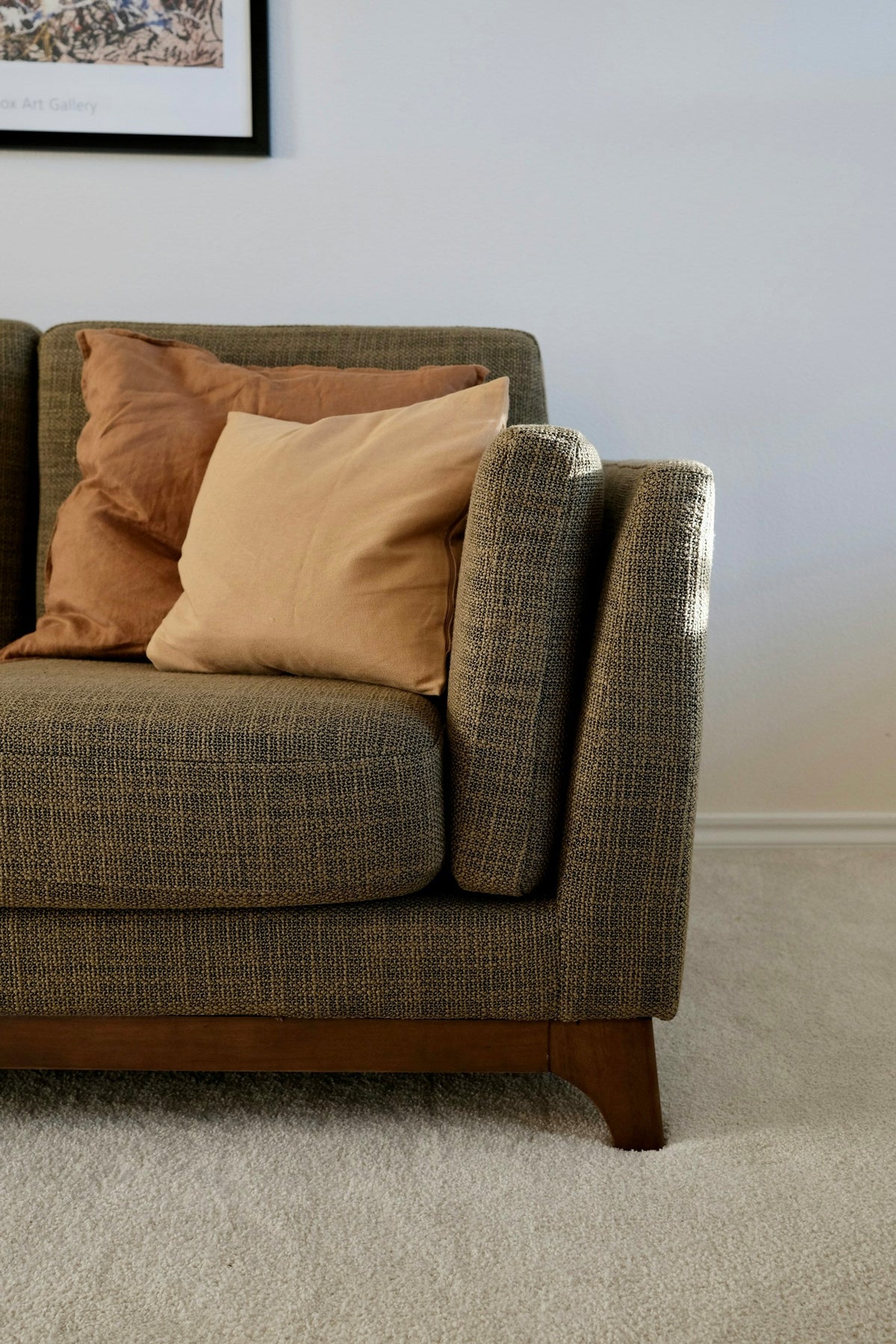
Cover: seating context only—not a Monvane model or certification evidence. Photo: Fujiphilm / Unsplash.
What GREENGUARD and Gold actually certify
UL Solutions owns and operates the GREENGUARD program. Its requirements address chemical emissions, including volatile organic compounds (VOCs), from products such as furniture. Certified products undergo manufacturing-process review and routine testing; the mark is more specific than a seller simply describing a sofa as “low emission.”
Gold is a stricter emissions tier, not a higher sofa-quality grade. UL describes lower VOC emission limits and additional requirements under the California Department of Public Health’s Standard Method for evaluating emissions in environmental chambers. Do not read Gold as a ranking of cushion comfort, seam strength or upholstery wear.
The underlying UL2818 scope uses environmental test chambers and exposure models to characterize emissions from products and components. It explicitly leaves complete toxicity effects outside the program’s scope. Meeting an emissions limit is not the same statement as containing no chemicals or guaranteeing how a particular person will react.
Program descriptions and buyer guidance were checked on October 14, 2026. This guide uses UL Solutions’ own program and directory descriptions, the published UL2818 scope, and government guidance to interpret the claim—not to certify any sofa pictured here.
First separate the sofa from its components
A certificate can be genuine and still answer the wrong question for your purchase. Start by identifying the object it covers.
| What the record identifies | What you can use it for | What remains to check |
|---|---|---|
| The finished sofa | The named sofa’s emissions certification within its stated scope. | Whether your exact model and selected options are included and the record is current. |
| An upholstery fabric or foam component | The certified component’s own covered claim. | A fabric or foam entry does not certify the finished sofa. Other parts are not automatically covered. |
| A product family or series | The products included in that record—not everything sold by the brand. | Whether the specific sofa and applicable upholstery, finish or configuration appear within the covered range. |
Our reading rule: a record answers only for the object and options it covers. A sofa photograph cannot fill in missing coverage, even when the fabric looks identical.

Hypothetical example: a certificate names the original sofa series, but the seller offers a replacement cover that is not included in its scope. The certificate does not answer for that changed cover. The missing match is a question to resolve—not a failed emissions result and not permission to assume coverage.
Match the current record to your order
Find the emissions record, not just a logo
Use UL Solutions’ Sustainable Products of Trust (SPOT) directory. UL identifies it as a source for GREENGUARD listings; it also contains other sustainability programs, so a UL listing alone is not enough.
- Save the exact purchase details. Record the retail model name or number, upholstery/color, finish where relevant, and sectional configuration. Ask for the manufacturer’s name if it differs from the storefront brand.
- Search the manufacturer and product. SPOT provides searches by manufacturer, product and standard. Look for GREENGUARD or GREENGUARD Gold specifically, then open the relevant entry rather than relying on a search-result image. The directory offers certificate downloads; free registration provides enhanced features including downloads.
Reconcile the certificate with the selected sofa
- Read the certificate and its coverage. Compare the certificate’s named products with your saved order options. Check the holder, certification tier, certificate identifier and stated validity dates. If the record names a family rather than your retail model, ask the seller to show where your model and options fit within that coverage.
- Resolve discrepancies before ordering. For a changed name, missing option, expired document or inaccessible entry, request the direct official record and current certificate from the seller. Ask for a written explanation linking the retail model to the certified product—not a second copy of the seal.
If the match remains unclear, do not count the claim as verified for your order. Our recommendation is to postpone a purchase that specifically requires certification until the exact coverage can be confirmed. A missing search result alone does not prove that a sofa failed testing; the name or evidence may be incomplete.
Keep room air and the rest of the sofa decision separate
Emissions certification does not answer every environmental question. Recycled content, repairability, end-of-life options and whole-life impact require different evidence. The FTC’s environmental-claims guidance distinguishes a specific certified benefit from broad, unqualified “green” or “eco-friendly” claims. A GREENGUARD mark should not do the work of a whole-sofa environmental assessment.
Certification does not measure the air in your living room. The EPA’s indoor-air guidance identifies multiple sources—including furnishings, flooring and household products—and explains the influence of ventilation, temperature and humidity. A product’s controlled test and the combined conditions in a furnished home are different questions. Neither the mark nor a room photograph establishes a particular occupant’s response.

Keep comfort, dimensions, care and serviceability on the shortlist too. The sofa materials and construction guide addresses those separate layers. Passing an emissions requirement cannot make an unsuitable seat or an impractical care routine work.
Apply the same standard to Monvane. The Chenille Loveseat page describes its upholstery and foam. No GREENGUARD certificate for that exact loveseat was verified in the specifications and FAQ reviewed for this article. That is an evidence limit, not a failed test. If certification determines your choice, send the exact model and selected options to Monvane Support and request the current matching record.
Use certification as one purchasing requirement, not as a substitute for the rest of the sofa decision. Choose a verified emissions tier that meets your requirement, confirm its exact product scope, and then evaluate the seat, room fit and ownership needs independently. Do not pay for a broad promise that the narrower record cannot support.
GREENGUARD sofa FAQ
Is CertiPUR-US foam the same as a GREENGUARD-certified sofa?
No. CertiPUR-US states that it certifies flexible polyurethane foam—not furniture, companies or product lines. A documented foam claim may be useful at that component’s scope, but it is not a substitute for a GREENGUARD record covering the selected finished sofa. If a listing shows both names, verify each claim separately.
What if the certificate holder has a different name from the retailer?
Do not accept or reject it solely because the names differ. Ask the retailer to identify the manufacturer and the certified model behind its retail name, then compare that explanation with the official entry. A shared logo or similar photograph is not the missing connection. If the seller cannot establish the match, keep applicability unconfirmed.
Does replacing upholstery or cushions carry the original certification forward?
Replacing upholstery or cushions creates a new scope question. Keep the original model record, identify the replacement part, and ask whether it falls within the current certification coverage. Do not assume that the original sofa’s record covers an unrelated cover or cushion—or conclude that the change failed an emissions test without evidence.