

Mattresses
How to Clean a Sofa Bed Mattress and Upholstery
Separate bedding, mattress covers, fixed sleeping surfaces and outer upholstery before cleaning. Use the right care route for each part, then check drying, fit and normal conversion before putting the sofa bed back into use.

On this page
To clean a sofa bed mattress and upholstery, strip the added bedding, identify the actual sleeping surface, and clean each component through its own approved route. A removable mattress cover may have a wash instruction; fixed ticking or upholstered sleeping panels may allow only surface care. Clean the outer sofa fabric separately. Finish the required drying, inspect the treated areas and refit only approved components before use. Before closing, clear the bed and follow its exact conversion instructions—never fold away unresolved moisture or force a changed fit.
This is surface care for an undamaged sofa bed, not a method for washing inner foam, dismantling a mechanism or disinfecting a mattress. Our cleaning workflow below organizes the job; your exact component instructions determine the treatment.
Separate the mattress, sleeping panels and upholstery
Open the product only by its documented method and identify what you will actually clean. Some sleepers have a separate mattress; others use upholstered seat, back or folding panels as the sleeping face. Do not remove a layer to find out what is underneath.
| Object | Care route to confirm | Permission that does not transfer |
|---|---|---|
| Sheets, protector or topper | Remove the added item and follow its own cleaning and storage instructions. | Its washability does not make the furniture underneath washable. |
| Detachable mattress cover | Confirm removal for care, then the exact cover's wash or other cleaning method, drying and refitting. | A zipper is not a care instruction. Keep the mattress core out of a cover-only wash. |
| Fixed mattress ticking | Treat the attached mattress surface only by its specified surface-care method. | Do not unzip, peel or cut it away because another mattress has a washable cover. |
| Integrated upholstered sleeping panels | Identify the care instruction for the panels that become the bed, including joins and edges. | The outer upholstery's W code does not apply automatically to the mattress. Nor does it authorize washing attached panels. |
| Outer arms, back and sofa upholstery | Use the care label for that fabric or leather and that component. | Its cleaner, tool or moisture permission does not approve the sleeping face or hidden filling. |
The featured room photograph separates loose bedding from the blue upholstered surround; it does not show a conversion or establish care permission. Photo: Max Vakhtbovych / Pexels.
For the current Monvane Oversized Sofa Bed, the product care says to spot clean with a damp cloth; its FAQ says to avoid harsh chemicals, direct heat and excessive moisture. That is a narrow surface-care route. The checked product information does not give mattress-cover removal, machine-wash permission or a fixed post-cleaning drying time. Ask about the exact part before adding one of those steps.
Prepare the open bed without dismantling it
- Clear and open. Move nearby objects, then reach the normal, fully supported open state using the exact model instructions. If the opening method is unknown or movement is abnormal, resolve that before cleaning. The sofa-bed opening and folding guide explains the identification task, not a substitute motion for your model.
- Strip the added bedding. Put washable sheets and protectors aside by their own care routes. Remove only accessories or cushions the instructions identify as removable; leave fixed ticking, sewn panels and attached supports alone.
- Record and inspect. Photograph the affected face, nearby seam and full care instruction. Note what spilled and anything already applied. Stop for torn fabric, an opening seam, exposed filling or moisture that may have gone beneath the accessible surface.
- Set out the permitted tools. Have clean, absorbent white cloths ready. Add a vacuum, attachment or cleaning product only when the affected component permits it. Prepare the drying space before introducing moisture. Keep the bed in its fully supported cleaning position.

Clean the mattress or integrated sleeping surface
Remove loose soil or excess spill first
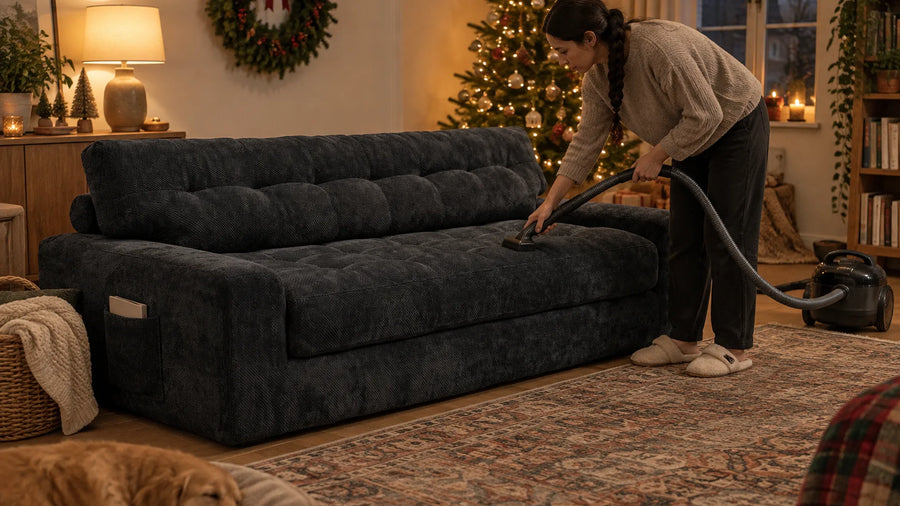
For a component that permits vacuuming, use its specified attachment and suction. Work across the exposed face and accessible edges without pulling at threads or forcing the nozzle into a fold or mechanism. Stop if suction catches the cloth or pulls a seam. Vacuuming permission for the sofa arms is not permission for its mattress.
For a fresh surface liquid, gently take up excess with a dry, absorbent cloth rather than rubbing it outward. Change to a clean part of the cloth as it picks up liquid. Lift loose solid residue with a suitable non-snagging tool without grinding it into the ticking. These actions remove excess; they do not authorize water, detergent or a second stain treatment.
Use the cover-only or fixed-surface branch
Confirmed detachable cover: photograph its orientation and closures before removal. Remove it only by the stated method and stop at an unexplained attachment or resistance. Keep the mattress or cushion beneath it out of the cover's wash. Record the permitted wash method, settings, product and separate drying instruction before starting; carry those exact conditions through cleaning. After drying, return it to its original orientation and guide the corners into place without using the zipper to pull distant edges together. The cover-washing guide expands this wash-and-refit sequence, but does not establish permission for your mattress cover.
Fixed ticking or attached sleeping panels: leave the assembly intact. If a hidden-area test is instructed, use the same permitted product and application method planned for the mark, let the test dry as directed, then check color and texture before continuing. With a damp-cloth-only route, use the lightly dampened cloth for gentle surface contact, not a spray or soak. With an expressly permitted shampoo or foam route, follow its application and residue-removal directions rather than mixing a household recipe. Keep treatment away from folds and openings; do not keep wetting the seam to reach a stain below it.
The distinction is real, not just terminology. American Leather's 2025 ticking instructions give its Gel ticking a water-based shampoo or foam spot-clean route, prohibit solvents and do not recommend steam. Its non-removable Tempur-Pedic ticking instead has a damp-cloth route without cleaning supplies. Those are named-product examples, not instructions for another mattress or Monvane sofa bed.
Clean outer upholstery by its own care route
Read the code only for the surface it identifies
If the outer fabric has a cleaning code, use it alongside the full care instructions. It selects a route; it does not supply every product, tool or drying step. Do not assign fabric codes to leather or transfer them to the sleeping panels.
| Outer-fabric code | Route | Do not turn it into |
|---|---|---|
| W | Water-based shampoo or foam upholstery cleaner, within the stated conditions. | Machine washing, soaking, solvent treatment or unrestricted water extraction. |
| S | The specified solvent-cleaning route. Use a qualified upholstery cleaner when you do not have complete approved home instructions. | A water-based spot treatment or a self-mixed solvent recipe. |
| SW or WS | Water-based or solvent-based care as the complete instruction allows; choose the stated method for the job. | Layering different products or mixing methods. |
| X | Vacuum-only care with the permitted tool. | A damp cloth, shampoo or other wet cleaning method. |
Treat one permitted area and finish it
- Remove loose excess from the accessible fabric without pushing debris into a seat gap or moving joint.
- Where instructed, test the intended treatment in an inconspicuous place and inspect it after the required drying. Stop for transfer, a ring or changed sheen or texture.
- Apply only the approved product and motion to the affected area. Keep moisture controlled; do not wet the filling to clean a surface mark.
- Complete the stated residue-removal and drying steps. Brush or realign a textured surface only if its instructions call for that action.

Dry, inspect and return the sofa bed to use
Before sitting or sleeping
Finish the drying method required for every affected component. Inspect the treated face, piped edges, seams and folds—not only the middle of the spot. Compare with the starting photograph for a ring, color change, altered texture or residue. If an approved cover was removed, complete its drying and refitting instructions and check that seams and closures are unstrained.
A dry-feeling top does not establish that a wetted core is dry. If liquid may have reached foam, backing or an inaccessible layer, keep the bed out of use and ask for a component-specific drying and inspection route. Do not solve an uncertain result with a guessed hour count, direct heat or extra bedding to hide the patch.
Before closing
- Clear the sleep face. Before closing, remove cloths, cleaning tools, pillows, sheets and any added topper or protector unless the exact instructions explicitly permit a particular layer to remain.
- Restore only approved original parts. Confirm the original cover orientation and any documented mattress retention or panel placement. Do not remove a structural mattress or fold the mechanism without a part it requires.
- Use the original conversion instructions. Proceed only after the required dry state and inspection are complete. Do not borrow a folding direction from a similar-looking sleeper.
- Check the normal seated state. Stop for changed resistance, trapped fabric, a new bulge or a part that no longer reaches its normal position. Do not lean on the sofa to make it close.
The job ends with the required dry state, stable surfaces and an unchanged normal furniture state—not simply a lighter stain. If you leave the bed open for use, add clean compatible bedding only after those surface and assembly checks pass.
When the result is not normal
| What you notice | Next action |
|---|---|
| Color transfers, texture changes or a ring grows | Stop the treatment and document the change after the instructed dry stage. Do not chase the ring with more water. Ask for the next material-specific route. |
| The stain remains but the surface is unchanged | Check whether the exact instructions permit another treatment. If not, ask the maker or a suitable upholstery professional rather than increasing concentration, friction or heat. |
| Dampness remains or inner moisture is uncertain | Keep the product out of use and request a component-specific drying and inspection route. Surface touch alone cannot resolve hidden wetting. |
| A cleaned cover will not fit normally | Stop pulling. Recheck its original orientation, assigned component and drying/refit instruction. Document persistent mismatch; do not use the closure as a tensioning tool. |
| Conversion behaves differently after cleaning | Stop further movement and obtain exact-model guidance. Report any part removed or refitted, items left on the bed and where resistance changed; do not improvise a repair. |
For a Monvane item, contact Monvane Support with the product name, order number if available, care-label and affected-area photos, spill identity, anything already applied and the current open or closed state. Ask about the unresolved component and symptom so the answer addresses this cleaning job.
Sofa bed cleaning FAQ
Can I clean the protector instead of the mattress?
Clean the protector by its own care instructions. After lifting it away, inspect the furniture face separately. If soil remained only on the protector, there is no reason to introduce a mattress treatment; if liquid passed through or reached an edge, the protector's wash result does not resolve the mattress condition.
Can I use baking soda or a steam cleaner?
Not as a universal sofa-bed method. Do not add powder, steam or extraction just because a mattress-cleaning tip recommends it. Obtain permission for the actual ticking or sleeping panel and the complete removal or finishing step. A W upholstery code by itself does not approve those treatments.
What if liquid spills on X-code upholstery?
Take up loose surface liquid gently with a dry absorbent cloth, without rubbing. Do not turn that first response into a damp-cloth or shampoo treatment. X does not supply a wet stain-removal route; identify the spill and ask the maker or a suitable professional what can be done for that exact fabric.
Should I turn the mattress or sofa bed over to clean underneath?
Only if the exact instructions permit that access and handling. Clean reachable areas in the supported state first. Do not flip a heavy assembly, release mattress retainers or dismantle panels to continue a routine clean. For an inaccessible underside mark, send its location and product identity to support before attempting access.