

Sleeper Sofa Guide
Velvet Sleeper Sofa: Audit the Surface in Both Modes
A velvet sleeper sofa should be judged as a two-mode surface. Verify the exact textile and care code, map sitter tracks, fold lines, hand-contact and sleep zones, then confirm that the sofa opens, supports use and resets without avoidable fabric stress.
On this page
A velvet sleeper sofa is a strong candidate when its exact upholstery, care instructions and conversion design work in both seating and sleep modes. Judge the surface at sitter tracks, fold lines, hand-contact points and the opened sleep area—not from one untouched swatch. Comfort comes from the complete support system; durability comes from matching the textile and mechanism to the actual conversion routine.
Fast decision: obtain the fabric name and composition, cleaning code, closed and open photos, conversion instructions and seam map. Test or document both modes under the same light. Reconsider the sofa if a fold rubs the pile, bedding catches a seam, the care method is unclear or the sleep surface cannot reset cleanly.
Make “velvet” specific before comparing products
Velvet is a surface family, not a complete performance specification. A listing may use traditional cut-pile velvet, performance velvet, crushed velvet, microfiber velvet or a plush trade name such as teddy velvet. Ask for the exact fiber composition, backing or knit construction, pile direction, cleaning code, removable-cover status and care instructions for the selected color.
Do not infer cleanability, abrasion resistance, pet suitability or stain protection from softness or sheen. If the seller publishes a tested performance value, save the test method and exact fabric variant. A swatch can answer touch, color and pile response; it cannot reproduce the folds and contact points created by the sleeper mechanism.
Start with the complete sleeper mechanism
Identify whether the product folds, pulls out, rolls, slides, flips or unfolds into an integrated foam surface. Record every place where upholstery bends, compresses, slides against another panel or passes through a handhold. The same velvet can behave differently on a fixed sofa and a convertible surface because the second product repeatedly changes geometry.
This article does not teach a universal opening sequence. Follow the model instructions and keep fingers, loose fabric, children and pets away from moving or pinch zones. If the mechanism needs force, stop and verify the step instead of using the upholstery as a handle.
Map six wear zones across the two modes

Sitter tracks
In sofa mode, regular users repeatedly compress and brush the same seat areas. Photograph the selected velvet from the front and side under consistent daylight, then note whether ordinary hand pressure changes the nap temporarily or creates a lasting mark after the care-approved reset.
Seat seams and fold lines
Mark which seams carry body load and which lines bend during conversion. Check that piping, tufting, zippers and stitched channels do not sit directly over an unsupported gap or a sharp fold. The goal is not a perfectly unchanged surface; it is a documented change that remains acceptable and within the product instructions.
Hands, arms and conversion grips
Body oils and repeated grasping concentrate at arms, front rails and pull points. Identify the approved grips and confirm that the owner does not need to pull on velvet, a seam or a loose cushion to open the bed. A hidden handle can reduce fabric contact only when it is present and accessible on the exact model.
Sleep body track and bedding zone
When opened, note where shoulders, hips, feet and bedding rest. Check whether sheets slide, catch texture or cross a fold. Remove bedding before closing unless the instructions explicitly allow otherwise; trapped fabric can create both mechanism and surface problems.
Judge comfort as two separate tasks
Velvet changes surface feel, warmth and friction, but it does not establish support. In sofa mode, compare finished seat height, usable depth, back support and the posture of the main sitter. In sleep mode, inspect the complete opened dimensions, surface transitions, support under every panel and the intended frequency of use.
Run the tests with the person who will use each mode. A plush handfeel can coexist with an unsuitable seat depth or a noticeable sleep transition. Record those results separately so an attractive textile does not receive credit for structural comfort it does not create.
Use a conversion-cycle observation, not a lifespan promise
During a showroom test or an allowed at-home evaluation, follow the instructions through several complete open–close cycles. Photograph the same fold, seam and hand-contact zones before and after. Count only cycles you actually perform; do not convert a short trial into a years-of-life claim.
Watch for pile direction changes, abrasion at a moving boundary, seam pulling, displaced cushions and difficulty returning to the sofa state. A change can be cosmetic and acceptable, or it can be a reason to pause. The product instructions, warranty terms and seller response determine the next step.
Build care around events and exact labels
| Event | First record | Decision |
|---|---|---|
| Dry crumbs or hair | Zone, attachment and care label | Use only an approved low-friction removal method |
| Fresh spill | Liquid, size, time and affected seam/fold | Follow the exact blotting or professional-cleaning instruction |
| Nap or pressure mark | Same-light photo and direction | Use only the approved pile-reset method |
| Unknown stain | Do not guess the substance | Pause; contact the seller or qualified cleaner |
| Persistent odor or dampness | Location, duration and moisture source | Stop folding; escalate according to care guidance |
Test any permitted method in the location specified by the manufacturer. Avoid generic steam, heat, brushing or solvent advice; those actions can affect fibers, adhesives, backing, color or foam. Keep the care record with the product rather than relying on memory.
Complete a two-mode acceptance card

Use one baseline photo set before use, a second after conversion and a third after the intended sleep trial. Match lighting and camera angle. For pile, seams, cleaning, comfort and reset, mark pass, change or unresolved. Add the exact instruction used rather than writing “cleaned” or “fixed.”
A sleeper passes when both modes remain usable and the reset routine is realistic. One state should not borrow a cushion, topper or sheet that the mechanism cannot store or safely close around.
A current Monvane example with limits
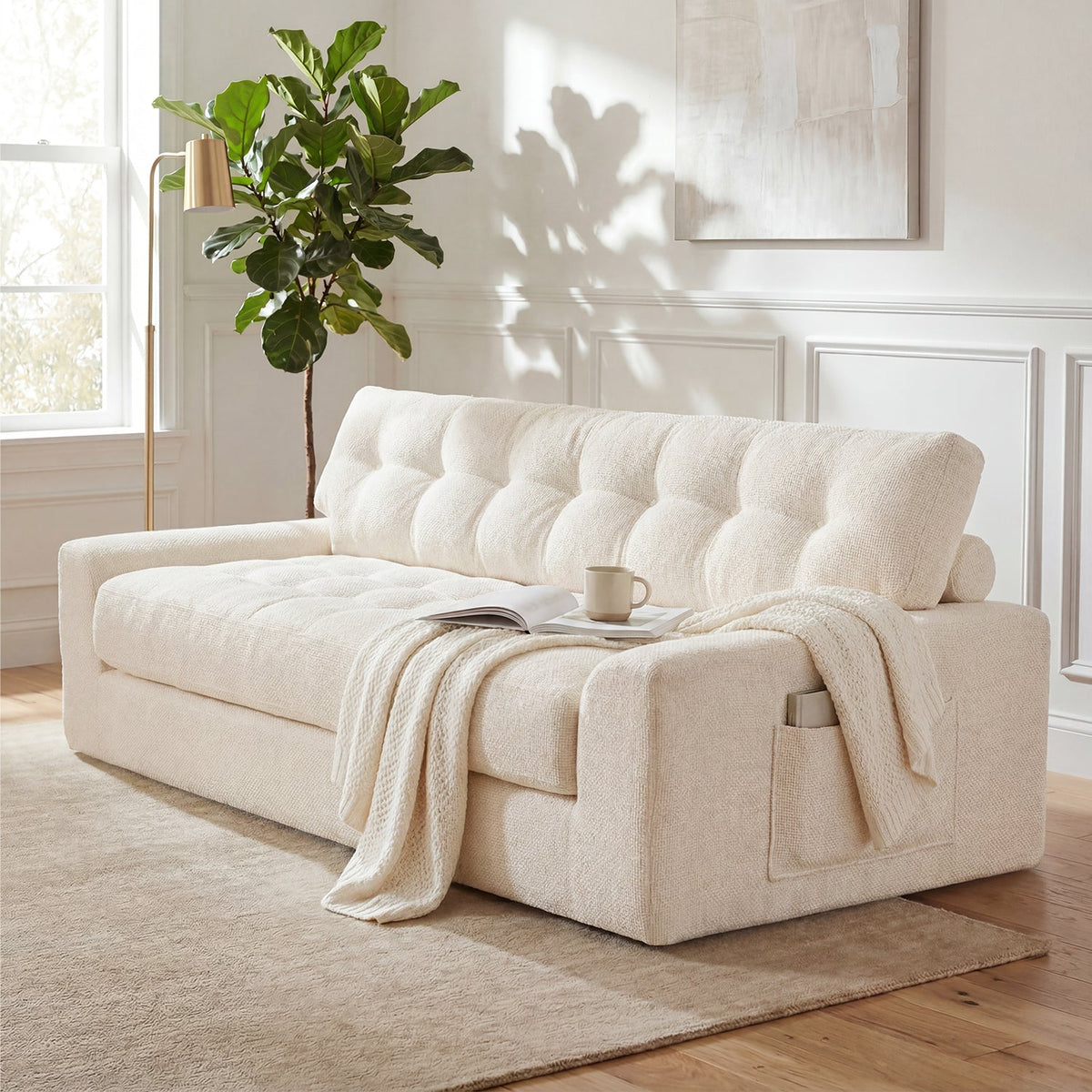
The supplied featured photo is archived under Monvane’s Boneless Sleeper Sofa family. It visibly shows a light textured sofa in seating mode, a continuous seat, large back cushions, arms and a side pocket. It does not show the open sleep state, the mechanism or an exact fiber label, so the image cannot prove that the pictured surface is velvet or that it meets the current product specifications.
The current Monvane Boneless Sleeper Sofa page describes its displayed Oversized Sofa Bed as a 3-in-1 sofa, lounger and flat sleeper with Teddy Velvet upholstery, a 38-inch seat depth, no assembly and an approximately 75-by-38-inch flat surface. Those facts make it a candidate for the two-mode card. Recheck the selected color, exact open dimensions, care instructions and model-specific conversion steps before purchase.
Who may like a velvet sleeper sofa?
- A household that values a soft, visually rich surface and accepts visible nap changes.
- An occasional guest setup with a documented conversion and cleaning routine.
- A room where closed and open footprints both work.
- An owner willing to remove bedding and inspect fold zones before closing.
- A buyer whose exact textile care code matches available cleaning support.
Who should choose another combination?
- A household that expects every pile direction to look identical after use.
- A high-frequency sleeper whose support or sleep-surface needs fail the two-mode test.
- A room where conversion repeatedly rubs the sofa against a wall or floor object.
- An owner who needs machine-washable covers but the exact model does not provide them.
- A buyer who cannot obtain a clear fabric identity or care instruction.
Questions about velvet sleeper sofas
Is velvet durable enough for a sleeper sofa?
It can be, but “velvet” alone does not answer. Verify the exact textile, backing, care code and any product-specific test data, then inspect the mechanism’s fold and friction zones.
Does velvet make a sofa bed more comfortable?
It can change surface softness, warmth and friction. Seat and sleep comfort still depend on dimensions, support, transitions and the individual user.
Can I leave sheets on a velvet sleeper when I close it?
Only if the model instructions explicitly allow it. Otherwise remove bedding so fabric is not trapped in a fold, seam or mechanism.
How should I clean a velvet sleeper?
Use the exact label and manufacturer instructions for the selected upholstery. Record the stain and zone, test only where directed and seek qualified help when the substance or method is uncertain.
Is teddy velvet the same as every velvet?
No. Treat it as the seller’s specific upholstery description and request fiber, construction and care details. Do not transfer performance claims from a different velvet.
Approve the textile and mechanism together
Save the exact variant, fabric identity, care instructions, mechanism type, closed and open dimensions, six-zone map, conversion observations, two-mode comfort notes and acceptance card. The decision is complete only when the surface and mechanism support the same routine.
After that evidence passes, compare current choices in Monvane’s sofa bed collection. A velvet sleeper succeeds when its beauty remains manageable through sitting, opening, sleeping, cleaning and resetting—not when it looks perfect in one closed photograph.