

Furniture Cleaning
How to Move, Take Apart and Clean a Loveseat: Make Three Records
Before moving a loveseat, create identity, parts and path records. Clean loose debris, choose a whole, soft-parts-only or documented-interface branch, protect the verified pieces, follow a rehearsed route, then restore and inspect from the original record.
On this page
Do not start by pulling on the loveseat. First identify the exact model, photograph its current state, confirm which parts are intentionally removable, and test the entire route. Clean loose debris before wrapping, separate only documented interfaces, protect each verified part, then restore and inspect the loveseat at the destination.
Fast answer: remove only loose cushions and model-approved components. If you cannot name the interface and show how it releases, keep it together and use a safer route or a qualified mover. “How to take apart a loveseat” has a model-specific answer, not a universal hidden latch.
Build a move packet before touching the loveseat
A useful move packet is a folder on your phone plus labeled physical bags. Save the order or model name, current product instructions, photographs, path measurements, helper plan and destination footprint. This record prevents a cushion, fastener or orientation from becoming a memory problem after the truck is loaded.

Identity record
Record the exact model and configuration rather than the visual style. Download or photograph the current setup and care instructions. Capture law labels, care labels, arrows, left/right markings and any product-specific warnings. If the model is uncertain, contact the seller before separating anything.
Parts record
Take an unobstructed front, back, both sides and underside photo. Add close-ups of every seam, foot, zipper, hook, bracket or join that is actually visible. Count loose cushions and accessories. These images document condition; they do not turn an ordinary seam into a release point.
Path record
Measure the loveseat’s maximum width, depth and height in the state you intend to move. Measure the narrowest clear opening, not only the nominal door size. Record door hardware, railings, ceiling changes, landings, elevator dimensions and the space needed to rotate. Remove obstacles before the test—not while two people are holding furniture.
Choose one of three disassembly branches
| Branch | Use it when | Allowed action | Stop condition |
|---|---|---|---|
| Move whole | The path works and no separation is required | Remove approved loose accessories only | Weight or turn cannot be controlled |
| Soft parts only | Cushions, covers or movable arms are explicitly loose/removable | Label, bag and protect each soft component | Cover or zipper is not identified as removable |
| Documented interface | Model instructions identify a bracket, bolt, latch or module seam | Follow that exact sequence and tool list | Resistance, hidden upholstery or mismatched hardware appears |
Never infer disassembly from the way another loveseat works. Some frames have detachable backs or bolted feet; others are one-piece foam forms with no tool-based assembly. Pulling at an undocumented junction can damage upholstery, foam, a frame or the interface you hoped to preserve.
Clean in two passes, not one aggressive session
Pass one happens before wrapping. Remove loose cushions only when approved. Use a clean, appropriate low-force method to remove crumbs, hair and dry debris from exposed gaps. This keeps grit from being pressed into the surface during transport.
Pass two happens after restoration. Follow the exact model’s care instructions. Test any permitted method in an inconspicuous location, control moisture, blot rather than spread, and let the surface dry under the stated conditions. Do not invent a solvent, machine-washing step, steam treatment or removable-cover claim.
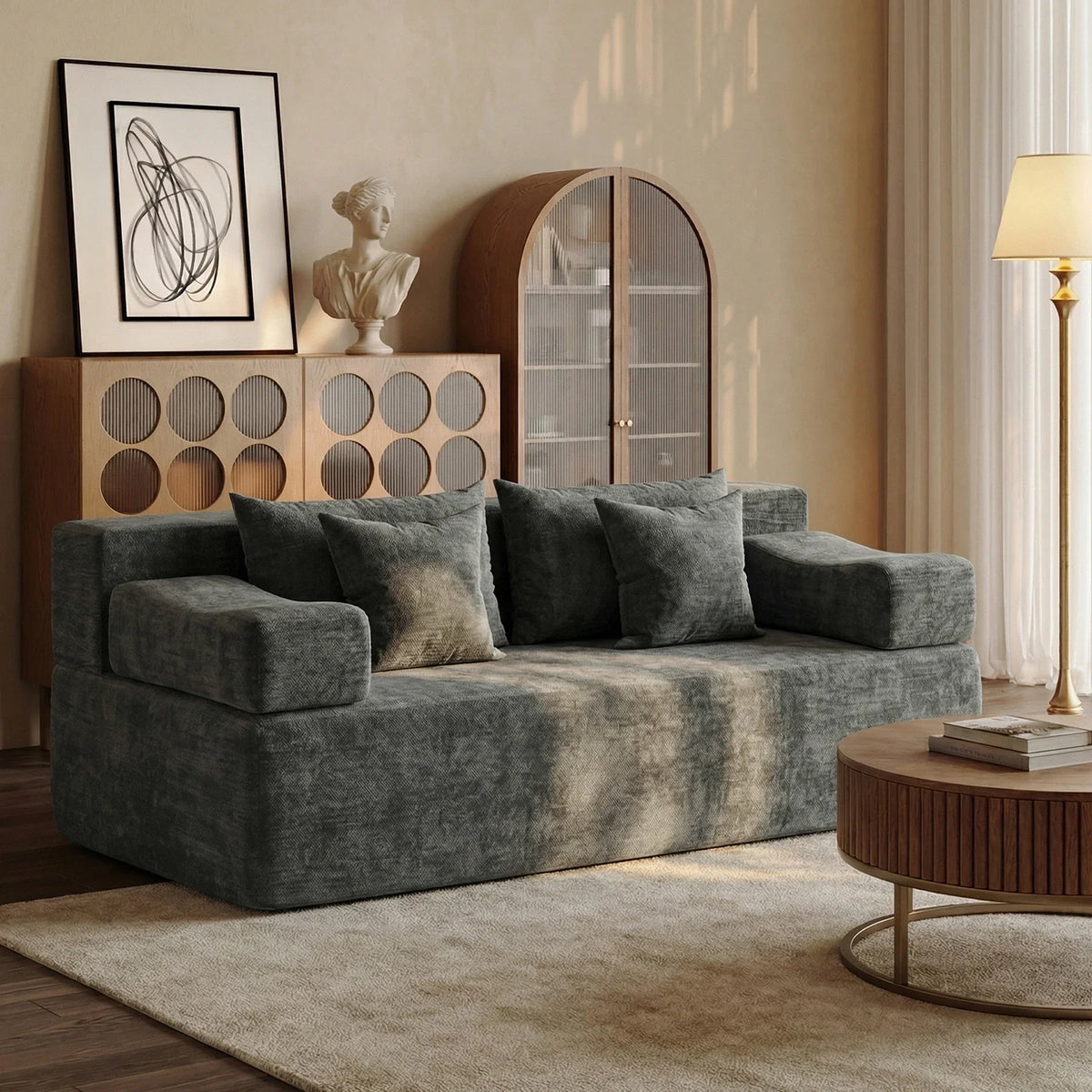
The current Monvane Chenille Loveseat page describes this named model as no-install and compressed-delivery, and its current care section says to spot clean with a damp cloth, avoid harsh chemicals, direct heat and excessive moisture, and gently pat to restore shape. That guidance belongs to this page and must not be transferred to another loveseat without verification.
Move through seven controlled states

- Identify: name the exact model, current condition and approved care/setup sources.
- Dry clean: remove loose soil before it is trapped under protection.
- Branch: keep whole, remove soft parts or use a documented interface.
- Protect: isolate hard edges, soft surfaces and loose pieces without adhesive on upholstery.
- Move: use the cleared route, agreed commands and enough capable help.
- Restore: follow the photographed order; return each labeled part to its location.
- Verify: compare condition, alignment, support and routine with the starting record.
Label parts by location and function
Use labels such as “left arm—front view,” “right back cushion” and “underside center,” not “piece A” unless the product manual uses that code. Put approved hardware from one interface in one closed bag and attach the bag to that part’s protection, not directly to upholstery. Photograph the filled bag beside its interface.
Keep cushions and flexible components away from sharp hardware, dirty floors and high compression. Do not use a loose cushion as a moving pad. If a cover is not explicitly removable, leave its zipper or closure alone.
Protect the surface without hiding the handholds
Protection must prevent abrasion and impact while leaving the team a controlled grip. Secure pads around the furniture rather than sticking tape to upholstery. Cover corners and verified hard components separately. Keep wrapping clear of the floor so it cannot become a trip point.
If moisture, temperature or storage duration could affect the material, use the product’s instructions or a qualified mover’s plan. A generic plastic wrap rule cannot account for every upholstery, climate or compressed-foam design.
Run a route rehearsal while the loveseat is still on the floor
Assign a leader, direction words and stop command. Walk the route empty. Mark where orientation changes and which person controls each end. Protect the building where needed. Confirm parking, elevator access and destination clearance before lifting. OSHA’s general materials-handling guidance says to lighten a load or get help when it is heavy or bulky; use that as a stop rule, not as a promise that a particular team size makes a loveseat safe to lift.
A tape outline can test the footprint; a rigid cardboard rectangle matching the critical cross-section can test a turn more honestly. If the mock-up cannot clear without bending through a wall or railing, the loveseat will not solve the geometry. Choose a different verified branch or professional help.
Restore from the record, then verify
Place the loveseat inside the destination footprint before final restoration. Reinstall only documented parts, in the documented orientation, without forcing. Give compressed or soft components the product-specific recovery time before judging final form. Keep packaging and the parts record until the setup passes inspection.
Compare the same front, side, back and underside views. Check visible seams, feet, approved connections and surface condition. Sit gently in each intended position and stop if anything shifts, sounds wrong or feels structurally different. Use Monvane contact support for a current Monvane model question; use the original seller or manufacturer for another brand.
Common loveseat moving mistakes
- Assuming every back, arm, cover or foot detaches.
- Cleaning with an unverified chemical immediately before wrapping.
- Measuring a doorway but ignoring the turn before or after it.
- Putting mixed hardware in one unlabeled bag.
- Taping directly to fabric or hiding all usable grip points.
- Judging a compressed foam loveseat before its named recovery window.
- Deleting the “before” photos before final inspection.
Loveseat moving and cleaning questions
How do I know whether my loveseat comes apart?
Use the exact model’s manual or seller guidance. A visible seam is evidence of construction, not proof of a release mechanism.
Should I clean a loveseat before moving it?
Remove loose dry debris before wrapping. Delay any deeper cleaning until you confirm the care instructions and can provide the required drying conditions.
Can I remove a zippered cover?
Only when the exact product instructions identify it as removable and explain care. A zipper may exist for manufacturing access.
What if the loveseat does not fit through the door?
Stop and recheck the maximum furniture dimensions, clear opening, turns and a documented disassembly branch. Do not force the product or alter a building without authorization.
When should I hire a mover?
Use qualified help when weight, stairs, tight turns, valuable materials, uncertain interfaces or building rules exceed your team’s safe control.
The finished move should be auditable
A successful move is not merely “the loveseat arrived.” The model is still identifiable, every approved part is accounted for, the surface has been cleaned within its instructions, the restored form matches the record, and the intended route and seating function still work. Keep the packet with the product files for the next move.
If moving reveals that a different format would suit the next room, compare current dimensions and care details in the Monvane loveseat collection only after closing the condition record for the loveseat you already own.