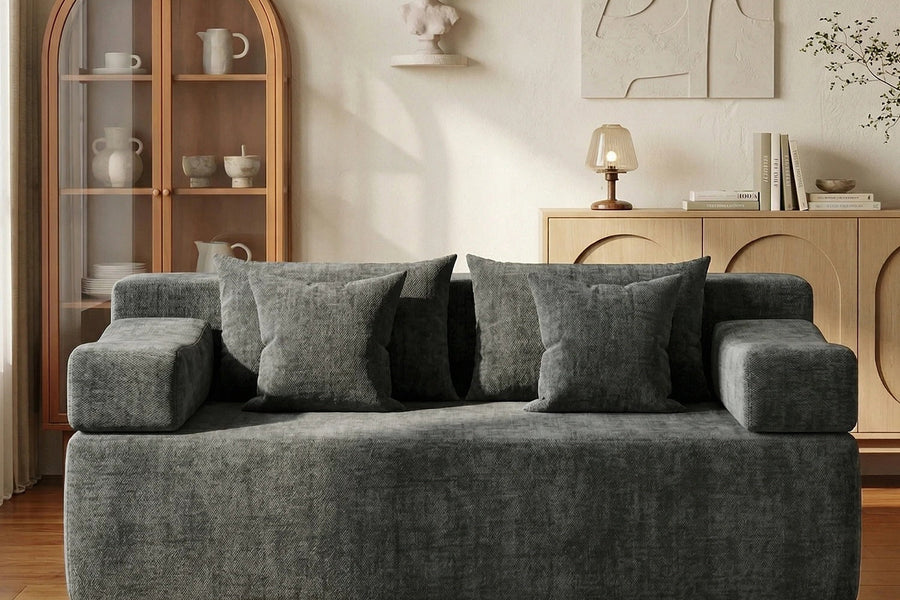


Fabric Durability
Best Fabric for a Sofa: Match Evidence to the Failure
The best sofa fabric is the exact upholstery whose fiber identity, surface construction, applicable test evidence, care limits and recovery path match the household’s dominant failure mode.
On this page
There is no universally best fabric for a sofa. The best choice for one household is the exact upholstery whose identity, construction, applicable test evidence, care limits and recovery path address that household’s most frequent and disruptive surface failures.
Fast shortlist: name the dominant failure mode, photograph the fiber/care identity, separate fiber from surface construction, request test method plus result and application, run the permitted sample routine, and score unknown evidence as zero.
Start with the failure—not a fabric name
Write what is likely to go wrong in observable language: pale pet hair remains visible; a dark garment transfers color; a loop catches; direct sun changes appearance; crumbs sit in texture; a frequent drink spill requires a care method the household will not perform. Then rank frequency, impact and recovery difficulty.

| Failure mode | Household evidence | Supplier evidence to request |
|---|---|---|
| Rub/wear | High-frequency seats, clothing, pet routes | Applicable abrasion method, result and use category |
| Pill/fuzz | Appearance tolerance and friction routine | Pilling method/result plus construction and care |
| Color transfer | Dark denim, wet/dry contact patterns | Wet and dry crocking evidence |
| Light change | Window direction and hours of exposure | Applicable lightfastness method/result |
| Soil/liquid | Food, drinks, children, pets | Exact approved care and finish limitations |
| Snag/pull | Claws, hardware, rough objects | Surface construction, sample and repair path |
Identify fiber content and surface family separately
Fiber tells you what the yarn or material contains. Surface family describes how the visible face is built or finished: plain weave, textured weave, chenille, corduroy, velvet, boucle-like loop, knit or coated surface. Two products sharing a fiber can behave differently because yarn, density, pile, backing, dyeing, finish, seams and care differ.
The FTC’s textile labeling guide explains fiber-content statements using generic fiber names and percentages for covered textile products. Use the sewn label, seller specification and order record to identify the exact upholstery; do not guess fiber from appearance or a marketing surface name.
How to identify the fabric on an existing couch
- Photograph the product label, care label and model/order information without removing them.
- Check the original invoice and exact product page or manual.
- Record fiber percentages, surface name, color/lot information and care wording separately.
- Ask the manufacturer or seller when a label and listing conflict.
- Mark unknown rather than using a burn, chemical or destructive home test.
“Velvet” or “chenille” alone may describe surface construction, not a complete fiber statement. “Polyester” alone identifies a fiber, not whether the surface is woven, knit, piled or coated.
Climb the fabric evidence ladder

1. Identity
Exact fiber content, surface family, selected color and model scope.
2. Build
Woven, knit, coated or piled construction; backing, finish and removable/non-removable status where documented.
3. Test
Named method, numerical or class result, specimen, intended application and date—not “tested for durability.”
4. Care
Approved routine, prohibited methods, drying conditions and whether the household can repeat them.
5. Recovery
Sample behavior, authorized repair/cleaning route, replacement part or cover availability, warranty scope and cost of a visible failure.
Read test results without turning them into lifespan
The Association for Contract Textiles performance guidelines organize abrasion, wet/dry crocking, lightfastness and physical properties by fabric construction and intended application. ACT also cautions that abrasion results are not necessarily a reliable indicator of fabric lifespan and that use and maintenance matter.
Use this as a disciplined question set. Do not claim a residential sofa meets a contract guideline unless the exact upholstery, method and applicable certification support it. Do not compare unlike test methods as though their numbers share one scale.
Is polyester a good fabric for a couch?
It can be a suitable fiber in some upholstery systems, but the word “polyester” cannot answer durability, pilling, color transfer, snagging, cleanability or comfort by itself. Request the percentage, yarn/surface construction, finish, applicable test evidence and care instructions for the exact product.
A blend is also not automatically better or worse. Each component, proportion and construction serves a specific system. Score the finished upholstery against the household failure mode rather than ranking fibers in isolation.
Compare common sofa surface families
| Surface family | Ask first | Do not assume |
|---|---|---|
| Chenille | Fiber, pile/yarn construction, direction, care and pilling evidence | All chenille has the same softness or maintenance |
| Corduroy | Fiber, rib size, pile direction, crushing/cleaning guidance | Ribs prove durability or hide every mark |
| Velvet | Fiber, pile construction, nap behavior, pressure/light appearance, care | Every velvet reacts the same to touch or liquid |
| Boucle/teddy/looped texture | Loop/nap construction, snag and pilling evidence, debris access | The marketing name identifies the fiber |
| Flat/textured weave | Fiber blend, weave density, seam/slippage and crocking evidence | A tighter-looking photo proves performance |
| Coated surface | Substrate, coating, flex/adhesion, care and repair route | It can be assessed with woven-fabric criteria |
Run a permitted sample routine
Request the exact color and construction sample. Label its orientation and source date. Under normal indoor conditions, observe it beside the room’s colors at different times, rub it only as the seller permits, place common clothing against it, inspect texture with pet hair or dry debris, and test any care step only when the instructions authorize that sample use.
A sample cannot reproduce cushion compression, seams, full-scale light exposure or years of use. It can reveal color, touch, directional appearance, debris visibility and whether the household dislikes the care process before ordering.
Score from the dominant failure mode
Allocate 100 points before viewing candidates. Example: dominant failure evidence 30, approved care/recovery 20, exact identity/construction 15, secondary failure evidence 15, appearance/touch 10, replacement/warranty clarity 5 and price 5. Change weights to match documented household priorities.
Apply hard gates: exact identity known, care feasible, dominant failure evidence acceptable and sample reviewed when available. A high total cannot rescue a hard-gate failure. Unknown receives zero until resolved.
Do not forget the upholstered system
Fabric does not work alone. Seams, cushion shape, foam, base support, edge design, module joins and care access determine where the surface rubs, folds, collects debris or can be treated. After selecting a surface, return to the exact sofa construction and inspect interface points.
This keeps the topic boundary clear: this guide chooses upholstery evidence by surface failure. The separate whole-build guide should judge frame, support, cushion and upholstery as one construction stack.
Use the supplied close-up at the right scope
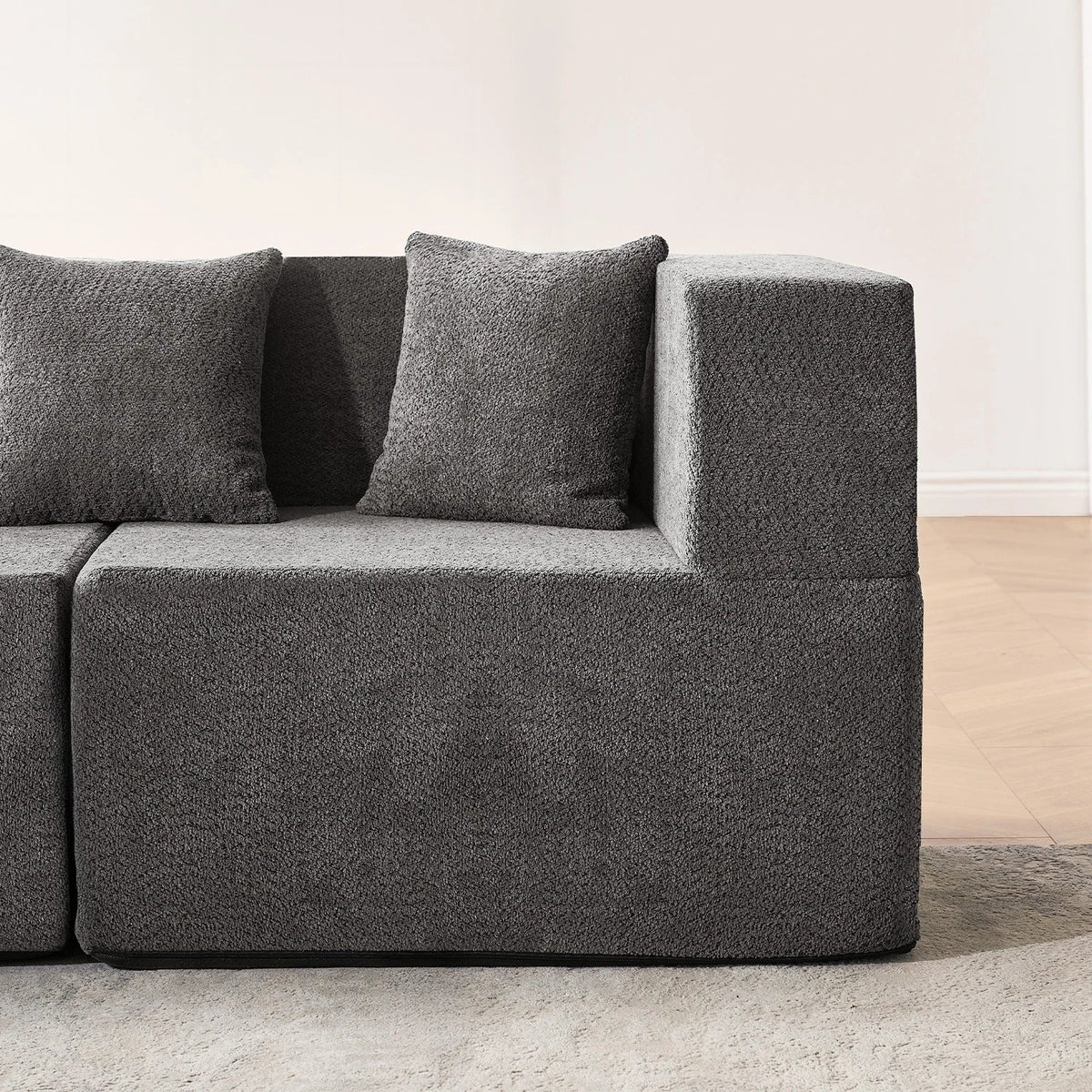
The featured archive image comes from Monvane’s Loveseat Sofa (2 Seater) materials and visibly shows a dark-gray textured upholstery close-up across an arm, base, seat boundary and pillows. It helps locate high-contact edges and texture; it does not establish fiber content, construction name, test performance or current SKU identity. Those facts require a label and current specification.
Fabric buying mistakes
- Choosing from one adjective such as “durable” or “pet friendly.”
- Treating a surface name as fiber content.
- Comparing abrasion numbers from different methods.
- Reading a high test result as a lifespan guarantee.
- Assuming a zipper means a cover is washable.
- Ignoring the exact color’s visible hair, lint and directional change.
- Awarding unknown evidence an average score.
Sofa fabric questions
What is the most durable couch fabric?
No fabric is most durable across every failure. Define wear, pilling, transfer, light, snagging or care as the dominant risk and compare exact evidence.
How can I tell what fabric my couch is?
Use the sewn label, model/order record and manufacturer specification. Appearance alone cannot reliably identify fiber content.
Is polyester good for pets?
The fiber name alone cannot answer snagging, hair visibility, pilling or care. Test the exact construction and color against the pet routine.
Are removable covers always easier to clean?
No. Confirm the cover is designed to be removed, its approved cleaning method, drying limits, refitting process and replacement availability.
Does a higher double-rub number mean longer life?
Not necessarily. Keep the method and application attached to the result; abrasion testing alone does not predict product lifespan.
The best sofa fabric is an evidence match
Approve the fabric when its exact identity is documented, the dominant and secondary failures have relevant evidence, the care routine is realistic, the sample passes household review and recovery is acceptable. Keep the label photo, test sources and scorecard with the order.
After the hard gates pass, compare Monvane’s current Chenille and Corduroy collections while rechecking the exact product’s fiber, surface and care facts.