

Furniture Comfort
How to Make a Sofa Bed More Comfortable
Make a sofa bed more comfortable by diagnosing setup, alignment, gaps, sliding and bedding first. Follow seven mechanism-aware checks before adding a topper.
On this page
A sofa bed can serve several everyday routines, but comfort changes with setup, surface alignment, user fit and the product’s conversion design.
“Uncomfortable” can mean a raised seam, misplaced mattress, sliding layer, undersized surface or damaged support. One topper cannot solve all of them, and extra thickness can make some sofa beds harder to open, close or store.
This guide is for setup and post-purchase troubleshooting. It does not decide whether a sofa bed is suitable as a primary bed every night, and it does not replace the instructions for a specific mechanism. When the seller’s guidance differs from a general tip, follow the product-specific guidance.
Diagnose the problem before adding a layer
Describe the problem in one sentence and note whether it happens in seating mode, sleep mode or both. Then remove loose bedding and inspect the bare surface. This separates the furniture problem from the bedding problem and prevents several changes from hiding the actual cause.
| What you notice | Check first | Useful first action |
|---|---|---|
| A seam, gap or ridge | Is every panel, leg and platform fully deployed and level? | Reopen and align the product; do not stuff the gap with loose pillows |
| The surface feels too firm | Has setup or expansion finished, and is the product undamaged? | Test fitted bedding; consider one removable layer only after setup |
| You feel the support below | Is the mattress or cushion bottoming out, torn or misplaced? | Stop if support is damaged; do not mask bent hardware with extra padding |
| Bedding or panels slide | Is the floor level, the base correctly placed and the layer properly sized? | Reposition the product and use a fitted layer that stays within the surface |
| The setup feels too warm | Are several thick layers trapping heat? | Reduce layers and change the bedding combination before changing the furniture |
| The surface is too short or narrow | Does the intended user fit the documented usable area? | Choose a correctly sized sleep surface; a topper cannot add usable dimensions |

Follow the seven-step comfort sequence
- Name the mode and symptom. Record whether the problem appears while sitting, lounging or sleeping, and whether it is firmness, a ridge, sliding, temperature, size or instability.
- Finish product-specific setup. Complete assembly, unfolding or recovery exactly as instructed. Do not judge a compressed cushion at arrival if the product page lists a later recovery point.
- Open and align the complete surface. Deploy every intended panel, leg, platform and lock on a clean, level floor; keep fabric, bedding and nearby objects away from moving joints.
- Correct the base problem. Reposition a separate mattress, flatten a fitted protector, clean a slippery floor area or remove a bunched layer. Do not use makeshift shims, plywood or loose gap-fillers.
- Add only fitted bedding first. Use a sheet or protective layer sized to the usable sleep surface, not merely to the sofa’s outside width. Recheck whether it stays flat during normal use.
- Test one compatible removable layer. If the surface is still too firm, try one layer that fits and can be removed without obstructing the mechanism. Change one variable at a time.
- Reassess and store safely. Check comfort again in both modes. Unless the product explicitly permits it, remove bedding and the topper before folding and store them separately.

Current setup example: Monvane Oversized Sofa Bed
Match the fix to the conversion mechanism
A pull-out sleeper with a concealed mattress has different failure points from a fold-flat back or an integrated cushion that unfolds across the floor. Identify the moving parts before changing the sleep surface.
- Concealed mattress or pull-out frame. Confirm the mattress is seated correctly, the frame is completely open and every support leg is secure. A removable layer may change surface feel, but it cannot repair a sagging or bent frame.
- Hinged-back or fold-flat design. Move the back only through its intended positions and keep loose bedding away from the hinge. If the product will not lock or lie as documented, stop forcing it.
- Integrated fold-out cushion. Align the connected sections and seams on a level floor. Because the seat cushions may become the sleep surface, there may be no separate mattress to replace.
- Slide-out or trundle-style design. Confirm the moving part is fully extended, supported and level with the main seat before using bedding.

Test a removable layer without obstructing the sofa bed
A topper can be a reasonable test when the fully set-up surface is intact, correctly aligned and still feels too firm for the intended user. It is not automatically the best first purchase, and this guide does not recommend one universal material or thickness.
- Measure the usable sleep surface, including its actual length and width. Keep the removable layer inside that area so it does not hang into a hinge, frame or walkway.
- Check the instructions for opening, closing and storage. If the product does not explicitly say a topper can remain inside, remove it before folding.
- Test the layer by itself before adding several blankets or pads. Multiple changes make it harder to tell what solved—or created—the problem.
- Use a separate storage plan. A removable upgrade is only practical when it can be kept dry, clean and clear of the conversion path between uses.

Check seating and sleep comfort separately
A change that improves the open sleep surface should not make the sofa awkward to sit on or interfere with conversion. In seating mode, position only the supplied or product-compatible support pillows, keep the moving path clear and confirm the seat still supports the intended posture. In sleep mode, check alignment, usable length and width, fitted bedding and the location of every seam.
Preference still matters: one user may prefer a firmer surface while another chooses a removable layer. The final setup must fit the user, remain stable and preserve the furniture’s intended movement.

Stop when the issue is structural
Do not keep adding padding when the real problem is unstable support. Stop using the sleep state and contact the seller or a qualified service provider when a locking part will not engage, a leg is loose, a frame looks bent, hardware moves unexpectedly, upholstery damage exposes internal parts or the surface remains materially uneven after the documented setup and recovery process.
For a current Monvane order or product question, use the Monvane Contact page
Apply the checklist to the current Monvane Oversized Sofa Bed
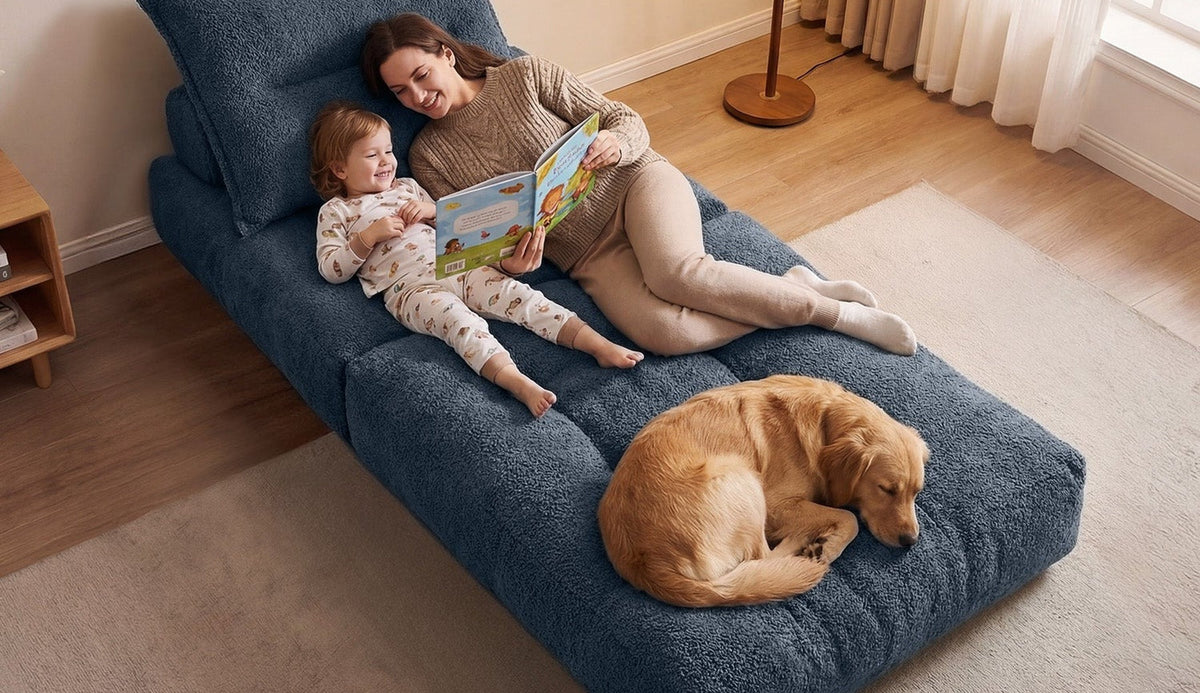
The current Oversized Sofa Bed is an integrated, cushion-based 3-in-1 seat, lounger and flat sleeper—not a traditional pull-out sofa with a concealed mattress. Its current page lists no assembly and a 48-hour natural-expansion period after unboxing. Finish that period before treating arrival-day shape as the final surface.
For this model, open the connected sections on a clean, level floor and keep them aligned before adding bedding. The current page lists closed dimensions of 38 inches deep by 33.86 inches wide by 16.54 inches high, and its FAQ lists an approximate flat surface of 75 inches long by 38 inches wide. Use the open measurement—not the closed width—to size a removable layer. Those numbers belong only to this product.
The live page lists Teddy Velvet upholstery and spot cleaning with a damp cloth, followed by gentle patting to restore shape. Do not saturate the surface or assume a cover is machine washable unless the current care instructions say so. The product gallery can prove visible seating and open states; it cannot prove that every user will prefer the same firmness.
For room and open-state planning, use the Monvane Sofa Size Guide
Answer common sofa-bed comfort questions
Can I put a mattress topper on a sofa bed?
Sometimes. First verify that the surface is intact, fully opened and correctly aligned. Then measure the usable sleep area and check the product instructions. Use a topper only if it fits without entering the mechanism or walkway, and plan to remove it before folding unless storage inside is explicitly approved.
Can I fold a topper inside a sofa bed?
Do not assume so. Extra thickness can obstruct a hinge, frame, latch or storage cavity. Unless the manufacturer or seller explicitly confirms that a specific layer can remain inside that model, remove the topper and loose bedding before closing the sofa bed.
How can I make a pull-out couch feel less uneven?
Start with the pull-out frame, mattress position, support legs and complete deployment. Remove bedding so you can see whether the mattress is seated correctly and the support is level. If the frame is unstable, bent or will not lock, stop using it rather than hiding the problem under padding.
How do I keep sofa-bed bedding from sliding?
Check that the product sits on a clean, level surface and that every panel is aligned. Use a fitted layer sized to the usable sleep surface, not the outside sofa dimensions. Keep straps, fabric and loose edges away from hinges and moving parts.
Does every sofa bed need a separate mattress?
No. Some pull-out sleepers have a concealed mattress, while fold-flat and integrated cushion designs use the seat or connected panels as the sleep surface. Identify the mechanism before shopping for a mattress, topper or replacement component.
When should I contact the seller instead of adding padding?
Contact the seller when supports are unstable, hardware is loose or bent, a lock will not engage, upholstery damage exposes internal parts, or the surface remains materially uneven after documented setup and recovery. A comfort layer should not be used as a structural repair.
Finish with one change at a time
The practical answer to how to make a sofa bed more comfortable is a controlled sequence: identify the symptom, finish setup, align the mechanism, fit the bedding, test one compatible removable layer and reassess both furniture modes. If the product is too small or structurally unstable, more padding is not the answer. Fix the actual mismatch or ask for product-specific support.
View the current Oversized Sofa Bed · Compare current Monvane sofa beds
Check the sources and evidence limits
The live Monvane Sofa Bed collection, current Oversized Sofa Bed product page and product data, gallery images, Sofa Size Guide and Contact page were checked on August 3, 2026. Prices, promotions, reviews, medical outcomes and unsupported performance claims were excluded.