

Buying Guides
Chenille Sectional Sofa: Comfort, Durability and Care Guide
A practical guide to chenille sectional comfort, durability evidence, wear-zone inspection and exact-product care.
On this page
A chenille sectional can be a good choice when you like a soft, textured surface and the exact product's seat, wear evidence and care instructions suit your household. The word chenille does not prove fiber content, cushion comfort, stain resistance, durability or machine washability. Start by treating those as separate fields. Feel the physical upholstery and complete seat, examine the sectional's high-contact zones, ask for named performance results when a claim matters, and follow only the care instructions for that product, variant and removable panel.

What chenille does—and does not—tell you
Chenille tells you how the yarn and surface are built. CottonWorks describes chenille yarn as short pile tufts held between core yarns, creating its characteristic fuzzy appearance. It does not identify one universal fiber: an exact chenille upholstery may use cotton, polyester or another documented blend. The fiber percentages must therefore come from the product record, not from the fabric name.
The same boundary applies to performance. “Soft” may describe an immediate hand feel, while “durable” needs a defined property, method and result. The Association for Contract Textiles treats abrasion, pilling and seam slippage as different evidence fields and warns that abrasion results alone do not predict upholstery lifespan. Construction, application and use still matter. A seller adjective, a close-up photo or one large cycle number cannot answer every durability question.
If you need a broader map of upholstery, cushion and frame roles, use the Monvane sofa materials and construction guide. For this decision, keep the focus on what the exact chenille cover and sectional record support.
Build a six-field chenille evidence card
Keep one card for each product and variant. Leave a field blank when the source is silent; a blank is more useful than a guess.
| Field | Record | Why it changes the decision |
|---|---|---|
| Yarn and surface name | Exact fabric name and any documented weave, pile or backing detail | Confirms what the label actually describes without inventing hidden construction |
| Fiber percentages | Exact percentages from the selected cover or variant | Prevents “chenille” from standing in for one universal blend |
| Cover and panel identity | Which seat, back, arm or base covers are fixed or explicitly removable | Controls what can be taken off and which care instruction applies |
| Named performance evidence | Test method, result, unit and intended application for abrasion, pilling, seam slippage or another claimed property | Keeps separate properties separate and makes comparisons possible |
| Sectional wear construction | Visible seams, piping, joins, inner corners and arm or chaise transitions | Locates the places that will receive repeated household contact |
| Exact care instruction | Permitted dry care, spot method, cleaning code, removable-cover setting, drying and stop conditions | Determines whether the routine matches the household before purchase |
A current IKEA KIVIK Tallmyra chenille cover page, for example, identifies 78% cotton and 22% polyester, names the removable cover and publishes detailed wash settings. That record is not care evidence for Monvane. It simply shows why fiber, cover identity and washing permission should appear together on one exact-product card.
Separate surface feel from sectional comfort
Chenille can feel soft at the surface, but a soft hand does not determine seat support. Cushion response, seat depth and height, back angle, joins between modules and the user's body all affect the complete experience. Test them in two passes.
- Test the surface. Use the physical swatch or upholstery under the room's normal light. Move a clean, dry hand lightly in different directions without rubbing or stressing the yarn. Note texture, visible shading and whether either is acceptable—not whether it proves durability.
- Test the complete seat. Use the same person, seat, posture and duration for each candidate. Check the seat center, the inner corner and the chaise or end unit. Record pressure, support, usable depth and any noticeable transition separately from the fabric hand.

If possible, repeat the complete-seat check after several minutes rather than relying on the first touch. A shopper who wants an upright conversation seat may evaluate the same cushion differently from someone who wants a deep lounge. Keep that use case attached to the result.
Judge durability at the sectional's wear zones
Do not ask only, “Is chenille durable?” Ask what is documented and where normal use will concentrate. On a sectional, useful comparison points include the favorite seat center, front edge, inner corner or module join, arm or chaise transition, and visible seams or piping. Save a baseline photo with the date, product/variant and zone name.

During normal ownership, compare the same place in the same light and viewing direction. Record visible shading, pile disturbance, fuzzy balls, a pulled yarn or seam movement without assigning a cause. Do not scratch, rub, pull, wet-test or otherwise accelerate wear. A visible change can trigger a care or support question; it cannot reveal remaining life or prove that the fabric, user or construction caused it.
If durability is decisive before purchase, request the exact method and result for the property you care about. A household concerned about fuzzy surface change needs pilling evidence, not merely an abrasion claim. A frequently used inner corner may also make seam or join evidence relevant. Compare only like methods and applications, and do not use one abrasion number as a lifespan prediction.
Compare three current Monvane chenille records
Monvane currently lists three relevant chenille sectional configurations. Their public pages were checked August 18, 2026. The shared word chenille does not create one shared care instruction or fill missing performance fields.
| Current record | Documented configuration | Public care wording reviewed | Clarify before relying on it |
|---|---|---|---|
| L-Shaped Sectional Couch (Chenille) | 103 in. wide × 65 in. deep; no-assembly layout | Mentions spot cleaning or removable-cover washing | Fiber percentages, exact removable panels, wash settings and named test results |
| U-Shaped Sectional Couch (Chenille) | 140.95 in. wide × 69.29 in. deep; 26-in. seat depth; no-tool setup | Mentions spot cleaning or removable-cover washing | Fiber percentages, exact removable panels, wash settings and named test results |
| 8 Seat U-Shaped Couch (Chenille) | Eight modular units; 27.56-in. seat depth | Spot clean with a damp cloth; gently pat to restore shape | Fiber percentages and named performance methods/results |
These are exact-page facts, not a ranking. Dimensions and seat depth change room fit and comfort testing; care wording changes the ownership routine. The reviewed pages identify chenille but do not list the fiber percentages or named abrasion, pilling and seam-slippage results needed for a comparable durability record. Ask Monvane Support to confirm a decisive missing field in writing for the exact selected variant.
Care for the exact cover, not the category
Start with the product name, selected variant and affected panel. Then follow this bounded sequence:
- Identify the instruction. Use the current label, manual or written manufacturer confirmation for that exact panel. Do not substitute a chenille recipe from another sofa.
- Confirm removability. A loose cushion is not proof that its cover is removable, and a removable cover is not automatically machine washable.
- Use only the permitted dry or spot method. If the instruction names a tool, solution or damp-cloth method, stay within that scope and test only where the manufacturer directs.
- Control moisture and friction. Do not saturate, scrub or brush unless the exact instruction permits it. For the current 8 Seat U-Shaped record, the published method is a damp cloth followed by gentle patting—not a universal detergent or wash cycle.
- Stop on a new problem. Color transfer, a water ring, pile distortion, a pulled yarn, seam movement or missing/conflicting instructions ends the owner cleaning attempt and starts a support question.
- Close the record. Follow the exact drying and refitting steps before use, then save what was cleaned, what method was used and the result.
Do not machine-wash anything until the exact removable cover, cycle, temperature, detergent limits and drying method are confirmed. If easy whole-cover machine washing is non-negotiable and the selected page cannot identify those fields, the product does not yet meet that requirement. For a spill-focused process and evidence limits, see the stain-resistant sectional guide.
Make the purchase decision
| Decision | Evidence condition | Next action |
|---|---|---|
| Buy | The physical surface is acceptable; the complete seat fits the intended user; decisive performance evidence is adequate; and exact care fits the household | Save the product/variant card and baseline wear-zone photos |
| Clarify | A fiber percentage, removable panel, wash setting, test method/result or construction detail is missing but decisive | Request written exact-product confirmation before ordering or cleaning |
| Skip | The household requires stain-proof, pet-proof, scratch-proof or universal machine-wash performance that the exact record does not support | Choose a product with the required property documented; do not upgrade marketing language into evidence |
Choose a chenille sectional only when the exact record supports the job. The fabric can provide a pleasing textured hand, but comfort belongs to the complete seat, durability belongs to multiple documented properties and observed zones, and care belongs to the exact cover. That separation produces a more reliable decision than either “chenille is durable” or “chenille is hard to clean.”
Sources and scope
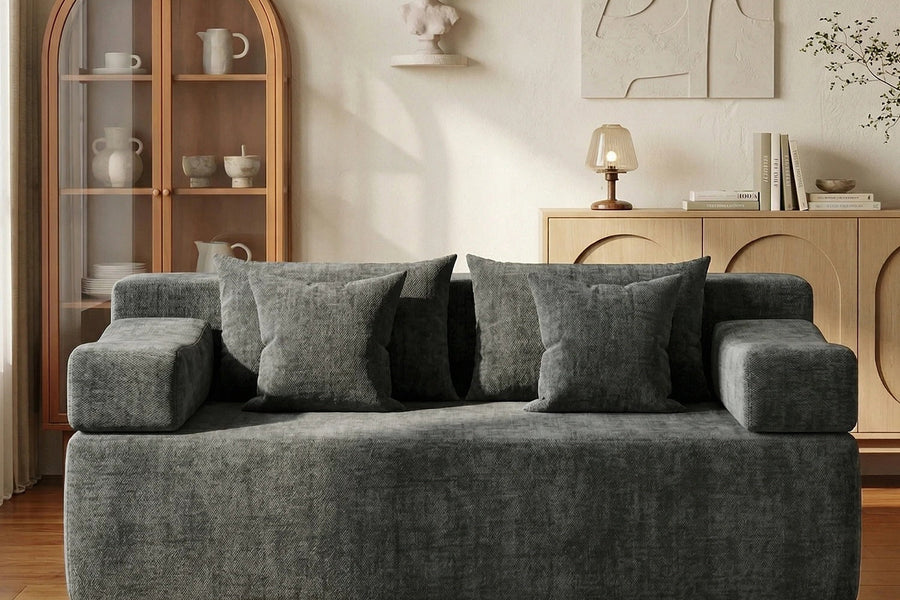
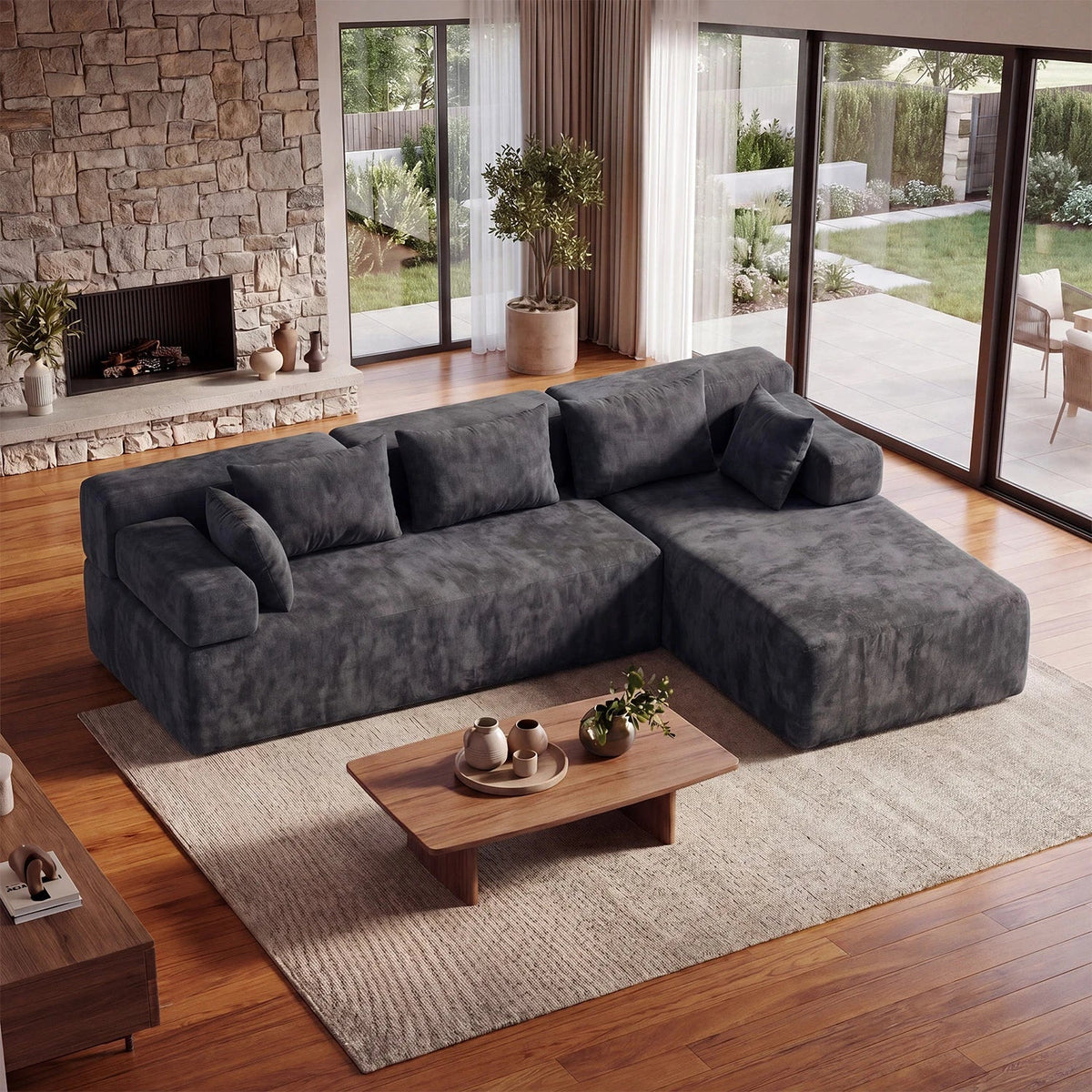
CottonWorks chenille references, Association for Contract Textiles performance guidance, the three linked Monvane product records and the cited IKEA KIVIK Tallmyra cover page were checked August 18, 2026. The external cover demonstrates documentation scope only; its fibers and care do not transfer to Monvane. The images show visible configuration and surface context, not hidden construction, performance, comfort or care permission. The six-field evidence card and five-zone map are Monvane editorial tools—not textile tests, certifications, diagnoses or lifespan predictions.